Discover Barcelona! From the sinuous lines of modernism that decorate its main avenues to the serenity of its green lungs and the depth of its museum collections, the Catalan capital offers an endless array of experiences. If you want to make the most of every day of your holidays in this year 2026, having a strategic starting point and top-tier accommodation is essential.
From HCC Hotels, we invite you to immerse yourself in this comprehensive monograph detailing the great modernist treasures, the most popular museums, and the most incredible parks in Barcelona. Discover them!
1. The heartbeat of Modernism: Architecture that defies time
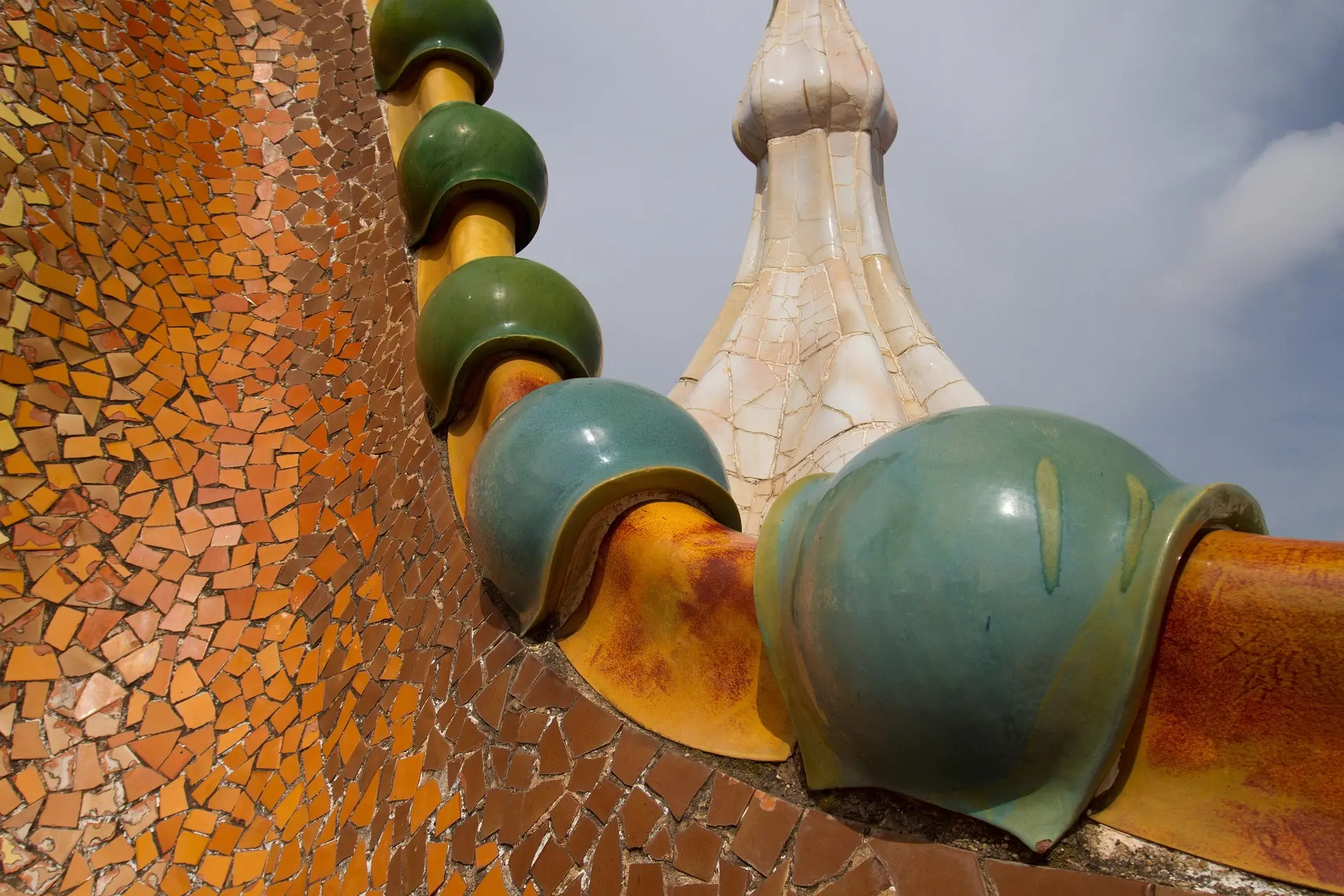
Barcelona’s urban landscape is inextricably linked to the modernist movement, an artistic and cultural current that transformed the city’s physiognomy in the late 19th and early 20th centuries, especially in the Eixample district. People strolling through its streets encounter facades that seem to come to life, where wrought iron, polychrome ceramics, and stone combine in organic forms inspired by nature. To plan your monumental architecture itinerary, you can consult the specific section on Modernism in Barcelona. Discover your route through Barcelona!
Sagrada Familia Basilica
The Basilica of the Sagrada Familia stands as the undisputed symbol of modernism and the city’s artistic passion. Originally started in 1882 under the design of architect Francesc de Paula Villar, it was Antoni Gaudí who took over the direction shortly after, taking the project to its maximum expression and dedicating himself to it body and soul until his death in 1926. Financed since its inception through anonymous donations and contributions from visitors, the construction faithfully follows the original plans, models, and drawings that were successfully preserved from the brilliant architect.
Approaching the temple, visitors can marvel at its three monumental facades: the Nativity of Christ (overflowing with optimism and details from nature), the Passion and Death (with straight, austere, and dramatic lines reflecting sacrifice), and the grandiose Glory Facade, destined to become the main entrance. Each facade is crowned by four slender towers that together symbolize the twelve apostles of the Christian faith. Both the Crypt and the Nativity Facade boast the UNESCO World Heritage designation.
The interior of the basilica transports you to a spiritual forest of stone, where colossal columns branch out into the ceiling emulating trees and the beautiful stained-glass windows filter natural light, creating a mystical and changing atmosphere depending on the time of day. In addition, it is possible to go up by elevator to some of its soaring towers to enjoy spectacular panoramic views of Barcelona.
- Address: Marina, 41.
- How to get there: Buses: 19, 33, 34, D50, H10, B24. Metro: Sagrada Familia (L2, L5).
La Pedrera (Casa Milà)
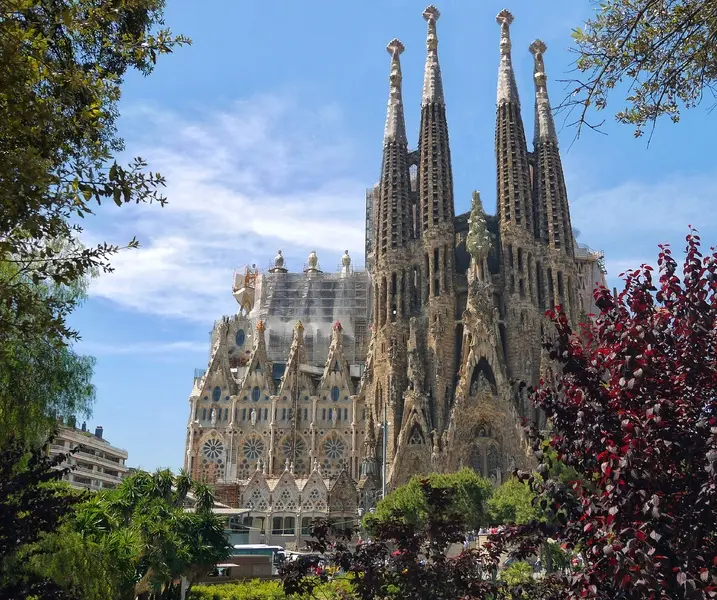
Popularly known worldwide as La Pedrera due to its rustic exterior appearance that evokes an open-pit quarry, Casa Milà is a jewel of civil architecture designed by Antoni Gaudí between 1906 and 1912. Its distinctive limestone facade lacks straight lines; everything on it is composed of curved and undulating shapes that evoke the sway of ocean waves, adorned with spectacular wrought iron railings that simulate climbing plants and seaweed.
As you enter the building, you will be captivated by the genius of its large circular inner courtyards, conceived by Gaudí to provide natural light and cross ventilation to all the homes on the property, breaking with the darkness of traditional blocks of the time. The visit includes access to the attic—where a framework of brick catenary arches evokes the skeleton of a great whale—and the iconic walkable rooftop. On this sculpted roof terrace, the chimneys and ventilation towers stand like stone sentinels and mythological warriors, some clad with white tiles and mosaics of broken bottle fragments using the trencadís technique. UNESCO declared it a World Heritage Site in 1984.
- Address: Passeig de Gràcia, 92.
- How to get there: Buses: V15, V17, H10, H8, 7, 22, 24, 6, 33, 34. Metro: Diagonal (L3, L5).
Casa Batlló
Located right on Paseo de Gracia, Casa Batlló is a masterpiece of Antoni Gaudí’s ingenuity. It was the result of a commission by the industrialist Josep Batlló to completely remodel a pre-existing conventional building built in 1877. Gaudí carried out a radical intervention, expanding the central lightwell clad in blue tiles to achieve greater luminosity and designing a facade that immediately captures the attention of everyone strolling along the avenue.
The building’s exterior physiognomy is loaded with symbolism and allegories, popularly linked to the legend of Sant Jordi (Saint George), the patron saint of Catalonia. The arched roof of large spherical ceramic pieces emulates the scales on the dragon’s back, while the tower crowned by a four-armed cross symbolizes the sword plunged into the beast. The wrought-iron balconies suggest carnival masks or skull fragments, and the columns on the main floor simulate human bones, which is why the society of the time also dubbed it the “house of bones.” It masterfully integrates color thanks to a mosaic of floating glass that sparkles under the sunlight.
- Address: Passeig de Gràcia, 43.
- How to get there: Buses: H10, V15, 7, 22, 24. Metro: Passeig de Gràcia (L2, L3, L4).

Casa Amatller
Located wall-to-wall next to Casa Batlló, Casa Amatller stands as a living testament to the industrial wealth and refinement of late-19th-century Barcelona. Initially built by Antoni Robert in 1875, it was majestically remodeled in 1898 by the architect Josep Puig i Cadafalch at the request of chocolate entrepreneur and philanthropist Antoni Amatller.
Puig i Cadafalch masterfully fused the Catalan neo-Gothic style with a very characteristic stepped gable at the top of the facade, which directly evokes the elegance of traditional houses in the Netherlands, cladding the walls with fine sgraffito and allegorical sculptures linked to collecting and the chocolate industry. Open as a House Museum, people who walk through its interior rooms can be dazzled by the original period furniture and some of the best collections of polychrome stained glass in European modernism.
- Address: Passeig de Gràcia, 41.
- How to get there: Buses: H10, V15, 7, 22, 24. Metro: Passeig de Gràcia (L2, L3, L4).
Casa Lleó Morera
Completing the monumental trilogy of the so-called Illa de la Discòrdia (Block of Discord), stands Casa Lleó Morera. Originally built in 1864, it underwent an extremely complex comprehensive renovation in 1905 at the hands of the prestigious architect Lluís Domènech i Montaner, commissioned by the Lleó Morera family. The building’s spectacular visual appeal was such that in 1906 it won the annual Artistic Buildings Contest awarded by the Barcelona City Council.
The building’s name is a clever visual pun devised by the architect, who integrated sculptures of lions (lleó) and mulberry leaves (morera) on the capitals and facades to pay homage to the family surnames. Although the building is currently for private use and its interior floors are not open to the general public, its majestic original period furniture and mosaic panels can be admired by everyone in the halls of the Museu Nacional d’Art de Catalunya (MNAC). The facade was delicately restored in 1992, recovering the sculptures that had been damaged in past decades, and since 2007 it has been an official part of the European Modernism Route.
Why is it called the Block of Discord? This section of Paseo de Gracia received its popular name due to the immediate confluence and artistic rivalry of three disparate buildings (Casa Lleó Morera by Domènech i Montaner, Casa Amatller by Puig i Cadafalch, and Casa Batlló by Antoni Gaudí). All of them were extreme remodels of existing buildings, creating a scene of stylistic disparity unique in the world.
- Address: Passeig de Gràcia, 35.
- How to get there: Buses: H10, V15, 7, 22, 24. Metro: Passeig de Gràcia (L2, L3, L4).
Palau de la Música Catalana
Located in the network of narrow streets in the city’s historic center, the emblematic Palau de la Música Catalana is one of the most unique monuments of global modernism. Designed by Lluís Domènech i Montaner between 1905 and 1908 as the headquarters for the Orfeó Català, this building stands out for its red brick pillar structure and large glass windows that break away from traditional heavy walls. It was designated a UNESCO World Heritage Site in 1997.
The main facade displays a superb sculptural group of carved stone by Miquel Blay that perfectly captures the essence of Catalan folk song. In the interior auditorium, natural light is the main protagonist thanks to an immense central glass skylight in the shape of an inverted dome, designed by the masters Rigalt and Granell, simulating a radiant sun. The stage is presided over by sculptural groups of muses carved by Pau Gargallo and Dídac Massana. If your stay does not coincide with their concert schedule, the Palau offers an excellent daily guided tour service to delve into its history.
- Address: C/ Palau de la Música, 4-6.
- How to get there: Buses: V15, V17, 47. Metro: Urquinaona (L1, L4).

Park Güell
Park Güell was born as an ambitious commission from the businessman Eusebi Güell to Antoni Gaudí in 1900 to develop a high-end residential estate inspired by British garden cities, projecting the construction of 60 single-family homes integrated into the nature of the Pelada mountain. Although the residential project failed commercially due to the lack of transportation at the time, Gaudí worked until 1914 molding the paths, viaducts, porches, and squares of the enclosure, organically integrating them into the terrain’s topography without altering the landscape. In 1926 it was officially opened as a public park and in 1984 it was declared a World Heritage Site by UNESCO.
Upon crossing the entrance threshold, people are greeted by two spectacular gatehouse pavilions with sinuously shaped roofs that evoke children’s tales, currently housing the park’s Interpretation Center. Climbing the monumental double staircase, you’ll find the emblematic polychrome mosaic dragon or salamander, an international symbol of Barcelona. The staircase leads to the Hypostyle Room, an immense porch of 86 Doric columns originally designed to house the estate’s market, above which unfolds the great Nature Square, bordered by a very long undulating bench covered in trencadís that functions as an unparalleled panoramic viewpoint over the sea and the city.
- Address: Olot, s/n.
- How to get there: Buses: H6, D40. Metro: Lesseps (L3).

Sant Pau Art Nouveau Site (Recinto Modernista)
Designed by Lluís Domènech i Montaner as an authentic health city, the Sant Pau Art Nouveau Site is the largest modernist hospital complex in the world. Built between 1901 and 1930, it originally served to relocate the facilities of the historic Hospital de la Santa Creu from its overcrowded medieval location in the Raval neighborhood. Domènech i Montaner conceived a revolutionary design based on independent pavilions connected by underground tunnels, surrounding each building with spacious gardens and green areas to improve the quality of life and mental health of the patients.
The complex occupies an area equivalent to nine blocks of the Eixample district. Its architecture highlights the exposed brick exterior facade, the clock tower, the site’s church, and the monumental administration pavilion, all decorated with glazed tiles, historic mosaics, and highly valuable sculptures. Declared a World Heritage Site by UNESCO in 1997, the hospital moved its medical care activity in 2009 to modern facilities located at the northern end, allowing for the complete restoration of the historic pavilions for cultural visits and as headquarters for international organizations.
- Address: C/ Sant Antoni Maria Claret, 167.
- How to get there: Buses: H8, 19, 47, 117, 192. Metro: Sant Pau – Dos de Maig (L5).
Casa de les Punxes
Formally known as Casa Terrades, Casa de les Punxes is an imposing residential structure built in 1905 by the architect Josep Puig i Cadafalch, who was commissioned by the Terrades sisters to unify three properties they owned into a single triangular block on Diagonal Avenue.
At first glance, the building’s exterior design directly evokes the silhouette of a Central European medieval castle, combining red brick walls with stone decorations and large panels of ceramic tiles allegorical of the history of Catalonia. The most characteristic feature of its physiognomy are its six circular towers crowned by impressive conical and pointed spires, which is why the citizens popularly dubbed it the house of spikes (punxes). Declared a National Historic Monument in 1975, currently its private interior spaces are not visitable by the general public, but it remains an essential architectural landmark that is a must-see from the outside.
- Address: Avinguda Diagonal, 420.
- How to get there: Buses: 6, 33, 34, 39, 45, 47, H8. Metro: Verdaguer (L4, L5).

2. The essential Museums: A journey through art, history, and memory
Barcelona has a top-tier international museum infrastructure that ranges from archaeological collections of ancient civilizations to the most avant-garde and interactive artistic trends of the 21st century. Visiting these spaces allows you to delve into the cultural roots of the city and enjoy exhibitions of great international relevance. To organize your cultural days, we recommend exploring the guide to Museums in Barcelona.
Egyptian Museum of Barcelona
The Egyptian Museum of Barcelona is one of the most significant private cultural and educational institutions in Europe dedicated exclusively to the study of ancient Egypt. Managed with rigor by the Clos Archaeological Foundation (inaugurated in 1993 thanks to the patronage of Jordi Clos), the center has a space of over 2,000 square meters dedicated to research, dissemination, and the permanent exhibition of a civilization that continues to fascinate humanity.
The museum’s collection is made up of hundreds of original archaeological pieces of incalculable value that narrate the customs, religious faith, daily life of the pharaohs, and complex funerary rituals of the time. Among its most famous and essential collections stand out a colossal stone statue of the pharaoh Ramses II, excellently preserved human and animal mummies, polychrome wooden sarcophagi, gold jewelry, and a meticulous and delicate stone relief reproducing the features of Queen Cleopatra VII. The center organizes educational workshops and temporary exhibitions of great interest.
- Address: València, 284.
- How to get there: Buses: 7, 22, 24, 39, 47, H10, V15, V17. Metro: Passeig de Gràcia (L2, L3).
Maritime Museum of Barcelona
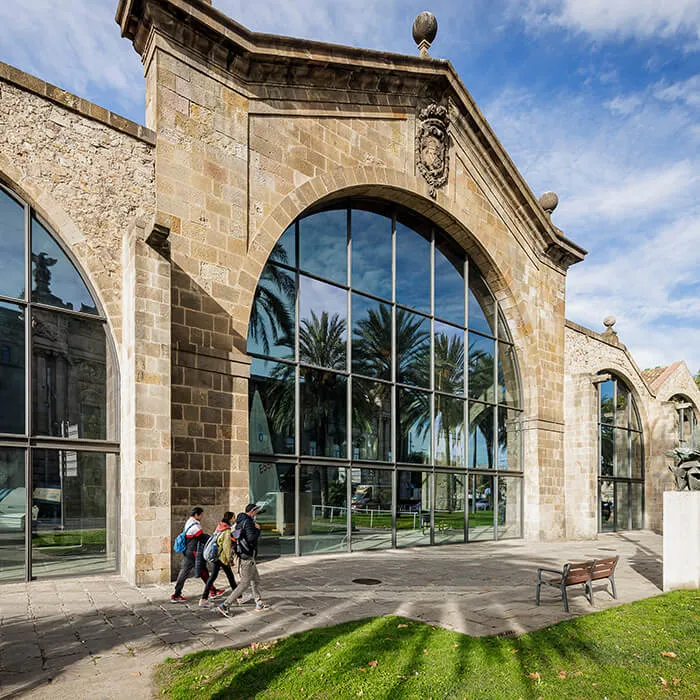
Located in the monumental architectural complex of the Royal Shipyards (Drassanes Reials), the Maritime Museum of Barcelona occupies one of the best-preserved medieval civil Gothic shipyards in the world, whose stone arch naves served between the 13th and 18th centuries for the construction and maintenance of the galleys of the Catalan armada. Declared a Historical-Artistic Monument in 1976 and officially recognized as a Museum of National Interest in 2006, it is a must-visit space to understand the city’s close ties to Mediterranean navigation.
Its rooms house an exceptional collection ranging from ancient precision nautical instruments (astrolabes, compasses, and quadrants), historical cartography of the great navigators, and unique collections of ex-votos and wood-carved figureheads, to detailed ship models from all eras. The great indoor jewel of the collection is the life-size reproduction of the Royal Galley of John of Austria, the flagship in the Battle of Lepanto in 1571. In addition, the museum manages the Schooner Santa Eulàlia, a historic three-masted sailing ship built in 1918 that is moored in the port’s waters and can be visited by the public.
- Address: Av. de las Drassanes, s/n.
- How to get there: Buses: 21, 59, 88, 120, D20, H14, V11, V13. Metro: Drassanes (L3).
Picasso Museum of Barcelona
Officially inaugurated in 1963 thanks to the wishes of the Malaga-born artist himself and his secretary Jaume Sabartés, the Picasso Museum of Barcelona is the world’s reference center for understanding the formative and youth years of the cubist genius. The museum’s value lies not only in its collections, but in its container: the rooms are distributed along five large Catalan Gothic palaces from the 13th and 14th centuries located on Montcada street (the Aguilar, Baró de Castellet, Meca, Mauri, and Finestres palaces), whose stone inner courtyards and stately staircases are a monumental jewel in themselves.
The museum’s permanent holdings house more than 5,000 works that reveal Picasso’s precocious genius and his close and indissoluble emotional relationship with the city of Barcelona. The collection details his stages of academic training, his youth work in the studio on Calle de la Plata, his Blue Period, and masterpieces of maturity as relevant as the complete series of Las Meninas (a personal reinterpretation of Velázquez’s painting composed of 58 canvases). The catalog includes paintings, drawings, engravings, ceramic pieces, sculptures, and original sketchbooks.
- Address: Montcada, 15-23.
- How to get there: Buses: 47, 120, H14, V15, V17, V19. Metro: Jaume I (L4).
Fundació Joan Miró
Located on Montjuïc mountain, the Fundació Joan Miró was born in 1975 thanks to a generous donation by the artist himself, who conceived the space as a dynamic cultural center to promote contemporary art and support the talent of young creators. The building was designed by the famous architect Josep Lluís Sert, a close friend of Miró, who projected an avant-garde structure with a marked Mediterranean character, characterized by the use of white concrete, open inner courtyards, and large skylights that flood the rooms with clean natural light, allowing a fluid dialogue between the artworks and the surrounding nature.
The museum guards the most important public collection of Joan Miró, comprising more than 14,000 pieces that cover all the stages and mediums of his artistic career. Visitors can admire colorful monumental paintings, surrealist bronze sculptures, fine engravings, preparatory drawings, and large textile tapestries that reflect his personal universe of constellations, stars, and symbolic figures. In addition, the foundation exhibits a valuable contemporary art collection composed of loans and donations from renowned artists such as Calder, Moore, or Duchamp, and features the Espai 13, a room exclusively dedicated to avant-garde artistic experimentation.
- Address: Parc de Montjuïc, s/n.
- How to get there: Buses: 55, 150. Montjuïc Funicular.
Museu Nacional d’Art de Catalunya (MNAC)
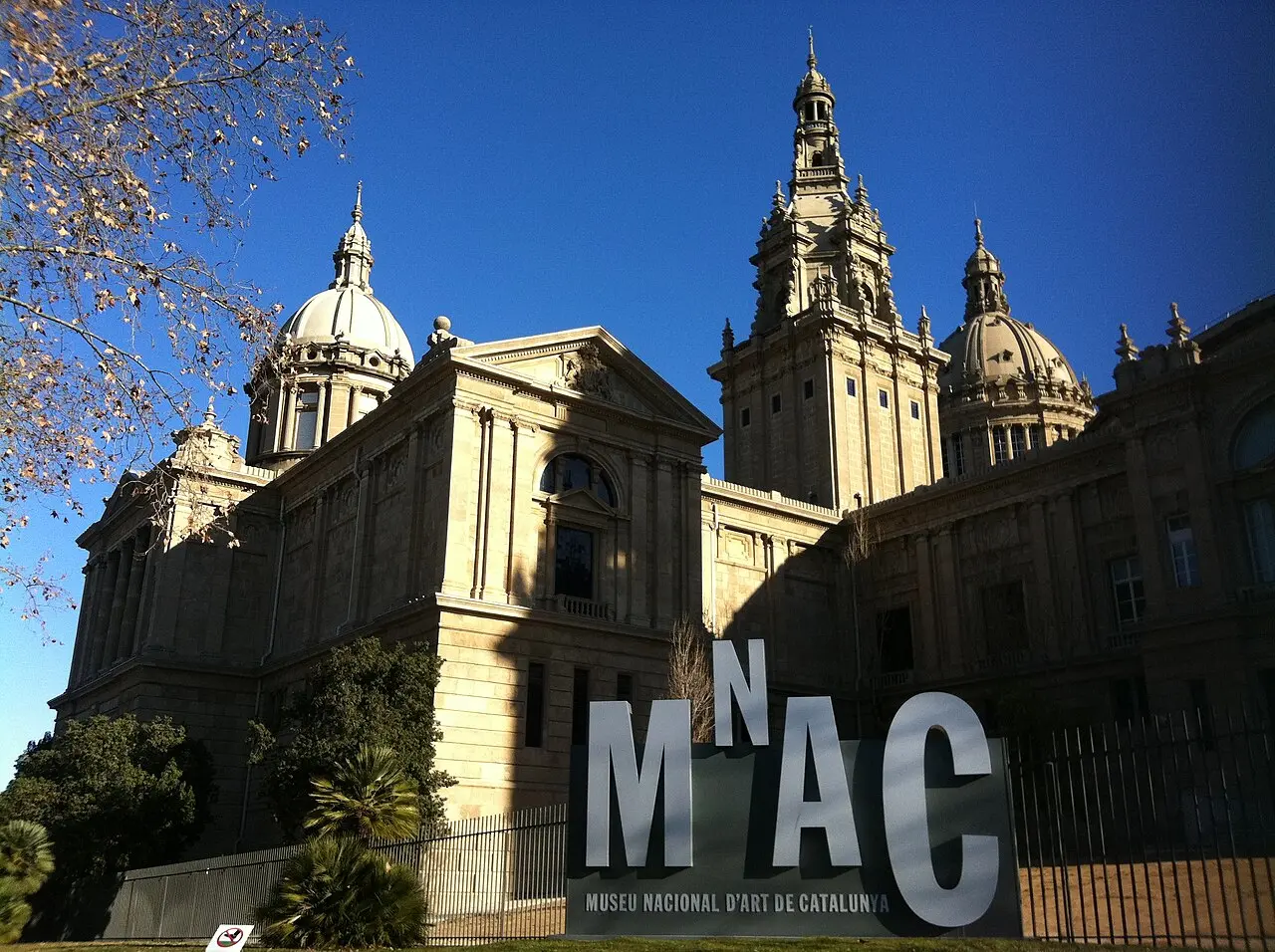
The Museu Nacional d’Art de Catalunya (MNAC) is the flagship museum institution of Catalan art, offering an exhaustive historical journey spanning from the Early Middle Ages to the mid-20th century. The museum is headquartered in the imposing Palau Nacional de Montjuïc, a colossal classic-style building of nearly 50,000 square meters expressly built for the 1929 International Exposition. Its monumental facade is crowned by a large central dome inspired by St. Peter’s in the Vatican, escorted by two smaller domes and four slender towers that pay direct homage to the architecture of the Santiago de Compostela Cathedral.
Inside its halls, collections of universal value are kept, standing out above all its Romanesque Art Collection, considered the most complete of its kind in the world; it brings together the spectacular original 11th and 12th-century frescoes and mural images rescued from the Romanesque churches of the Pyrenees (such as the famous Pantocrator of Sant Climent de Taüll), transferred to special supports that faithfully reproduce the original apses. The museum also houses rich collections of Gothic, Renaissance, and Baroque Art (enriched by the Cambó legacy and works from the Thyssen-Bornemisza Collection), as well as an excellent Modern Art section gathering paintings by Ramón Casas, Santiago Rusiñol, and original furniture by Antoni Gaudí. Its rooftop viewpoint offers a spectacular panoramic view of Plaza de España.
- Address: Av. Reina Maria Cristina, s/n.
- How to get there: Buses: 13, 23, 46, 55, 65, 79, 109, 125, 150, 165, D20, D40, H12, V7. Metro: Espanya (L1, L3).
Fundació Antoni Tàpies
Founded in 1984 by the Catalan artist Antoni Tàpies himself, the foundation opened its doors in 1990 with the mission of promoting the study and appreciation of contemporary art. The center occupies a building of great historical relevance: the former headquarters of the Montaner y Simón publishing house, designed in 1885 by the modernist architect Lluís Domènech i Montaner. This building is a key piece of Barcelona’s architecture, being one of the first to use exposed brick and industrial wrought-iron structures in its civil facade, combining decorative elements of Mudéjar and classical inspiration.
The museum’s permanent exhibition takes a meticulous chronological journey through the formal evolution of the artist from the 1940s to his latest works, allowing visitors to deeply understand his technique based on the use of industrial materials, earth, ropes, and textures (matter painting). In 1990, to crown the rehabilitation of the center, the monumental sculpture “Núvol i cadira” (Cloud and Chair) was installed on the roof, a colossal structure designed by Tàpies himself using aluminum tubes and stainless steel mesh that gives height to the building, harmoniously dialoguing with Domènech i Montaner’s original facade without taking artistic weight away from its red brick.
- Address: Aragó, 255.
- How to get there: Buses: 7, 22, 24, 39, 47, 63, 67, 68, B24, H10, V15, V17, X1. Metro: Passeig de Gràcia (L2, L3, L4).
Center of Contemporary Culture of Barcelona (CCCB)
Located in the central Raval neighborhood, the Center of Contemporary Culture of Barcelona (CCCB) occupies the historic building of the former Casa de la Caridad, a 19th-century charity complex built over the ruins of a medieval monastery. The ambitious architectural reform and modernization carried out by architects Albert Viaplana and Helio Piñón replaced one of the wings of the inner courtyard with an immense 30-meter-high prismatic glass facade that leans over the patio, reflecting the city’s urban pulse. This brilliant intervention was awarded the prestigious FAD Award for Architecture.
Managed jointly by the Barcelona Provincial Council and the City Council, the CCCB functions as an avant-garde multidisciplinary cultural center, lacking a fixed permanent collection but with a ceaseless program of large-format temporary exhibitions, thought festivals, public debates, international symposiums, and lecture series. All its activities revolve around a central conceptual axis: the city, urban space, and the problems of contemporary society, inviting residents and visitors alike to analyze the present from multiple creative disciplines.
- Address: Montalegre, 5.
- How to get there: Buses: 24, 52, 54, 55, 59, 63, 67, D50, H12, H16, V13, 120, X1. Metro: Universitat (L1, L2), Catalunya (L3).
Museu d’Art Contemporani de Barcelona (MACBA)
The Museu d’Art Contemporani de Barcelona (MACBA) is the great banner of art from the second half of the 20th century and contemporary trends in the city. Its main headquarters is a radiant white building designed by the famous American architect Richard Meier, officially inaugurated in 1995. Meier’s design is a lesson in modern geometry that cleanly combines the straight lines of the walls with curved volumes, using large glass windows to flood the interior galleries with natural light and visually connect the exhibition halls with the Plaça dels Àngels.
The gestation of the museum dates back to 1959 thanks to the cultural vision and drive of the art critic Alexandre Cirici i Pellicer. In 2006, the MACBA notably expanded its exhibition surfaces by integrating the Capella Macba, the former Gothic church of the Convent dels Àngels located right in front of the main building, creating a fabulous architectural contrast between medieval stone and modern minimalism. Its permanent collection brings together thousands of works of national and international contemporary art, complemented by a varied agenda of traveling exhibitions, performances, and experimental activities. Its outdoor square is an international gathering hub for skater culture.
- Address: Plaça dels Àngels, 1.
- How to get there: Buses: 24, 52, 54, 55, 59, 63, 67, D50, H12, H16, V13, 120, X1. Metro: Catalunya (L1, L3), Universitat (L1, L2).
Joan Antoni Samaranch Olympic and Sports Museum
Located in the Montjuïc Olympic Ring, a short distance from the Lluís Companys Stadium, the Joan Antoni Samaranch Olympic and Sports Museum is a dynamic and interactive space dedicated to narrating the history of world sports and the social significance of physical activity. Inaugurated in 2007, the center updated its official name in 2010 to pay a sincere tribute to the figure of Joan Antoni Samaranch, an illustrious Barcelona citizen who presided over the International Olympic Committee (IOC) between 1980 and 2001, leading the transformation of the modern Olympic Games and the great Olympic event of Barcelona ’92.
Its interior galleries house more than 5,000 priceless historical pieces spanning all sports disciplines, ranging from high-competition sports and international Olympic feats to leisure and grassroots sports. The museum’s narrative is not limited to exhibiting trophies and historical equipment of great athletes but celebrates how the values of sports (effort, self-improvement, mutual respect, and solidarity) promote inclusion and peace in societies. The center stands out for its innovative interactive spaces equipped with advanced multimedia technology, simulators, and touch screens that allow you to test your physical abilities in an entertaining way.
- Address: Avinguda de l’Estadi, 60.
- How to get there: Buses: 13, 55, 150. Metro: Espanya (L1, L3) connecting with a bus.
CaixaForum Barcelona
Located at the foot of Montjuïc mountain, the CaixaForum Barcelona is one of the most dynamic, active, and multifaceted cultural centers in the city. It is headquartered in the historic premises of the former Casaramona Factory, an innovative textile factory designed in 1912 by the modernist architect Josep Puig i Cadafalch. This exposed brick building is a crowning achievement of Catalan modernist industrial architecture, being a pioneer factory in its time by using electric power motors for its production line, ensuring optimal hygienic conditions, and masterfully using natural light for the well-being of the workers.
Managed by the ”la Caixa” Foundation, the venue combines its modernist exterior facade with avant-garde architectural solutions at its entrances, such as the sunken marble courtyard designed by the Japanese architect Arata Isozaki. The center lacks a fixed collection and functions as a large cultural container, hosting major temporary exhibitions of a historical, archaeological, and artistic nature that have brought masterpieces by legendary painters such as Salvador Dalí, Velázquez, Pablo Picasso, or Andy Warhol to Barcelona. Its varied programming includes independent film series, musical concerts, scientific debates, current affairs conferences, and specific educational programs for families.
- Address: Av. de Francesc Ferrer i Guàrdia, 6-8.
- How to get there: Buses: 13, 23, 46, 65, 79, 91, 109, 150, 165, H12, H16. Metro: Espanya (L1, L3).
Museu d’Arqueologia de Catalunya (MAC)
Located right in Montjuïc Park, the Archaeology Museum of Catalonia is headquartered in the historic Graphic Arts Pavilion, a classic palatial-style building built for the 1929 International Exposition. Formally founded in 1932 and subjected to a profound structural and interactive renovation between 2010 and 2013, this museum invites history enthusiasts to take a fascinating chronological journey through the cultures that populated the Catalan territory and the western Mediterranean.
Its permanent collections span from prehistory to the medieval era. The visit kicks off with a modern audiovisual space that rigorously details the complex funerary rituals of Bronze Age communities. Among its most famous archaeological holdings are the gold crown from the Visigothic treasure of Torredonjimeno, the fine silver tableware of the Iberian treasure of Tivissa, and a jaw fragment of a Neanderthal individual found in Sitges, considered one of the oldest human remains located in Catalonia. The MAC functions as a networked museum, coordinating the management and resources of highly historically significant archaeological sites and branches spread throughout the Catalan geography (such as the Greco-Roman ruins of Empúries or the Roman city of Tarraco). It offers educational workshops ideal for families.
- Address: Passeig de Santa Madrona, 39.
- How to get there: Buses: 55, 150. Metro: Espanya (L1, L3).
3. The incredible Parks: Oases of nature, history, and recreation
Beyond its commercial dynamism and urban density, Barcelona has a select network of historic parks, themed gardens, and wooded areas that function as true green lungs for the city. They are ideal environments for taking refuge from the heat of the asphalt, strolling among ancient trees, playing outdoor sports, or enjoying panoramic views over the Mediterranean coast. To plan your outdoor walks, we invite you to consult the guide to Parks in Barcelona.
Ciutadella Park
The Parc de la Ciutadella is the great historic public park of Barcelona par excellence. The origin of the grounds is tied to the city’s military history: it occupies the land where King Philip V ordered the erection of an immense military fortress or citadel in the 18th century to control and repress the citizens of Barcelona after the War of Succession. Following the revolution of 1868, the fortification walls were demolished by the people, entrusting the urbanization of the space to the architect Josep Fontserè under the mandate of Mayor Francesc Rius i Taulet. The park was the definitive epicenter of the famous 1888 Universal Exposition, transforming what was once a symbol of repression into a dazzling urban oasis of peace and culture.
Today, you can stroll through its tree-lined avenues admiring original surviving buildings from the old Bourbon fortress, such as the military chapel, the governor’s palace (current seat of a high school), and the arsenal (proudly converted into the official seat of the Parliament of Catalonia). From the architectural legacy of the 1888 Exposition, the noble wood Umbracle (shade house), the iron and glass Greenhouse, the Museum of Geology (Martorell), and the Castle of the Three Dragons by Domènech i Montaner (former Museum of Zoology) have been preserved. The park’s main attraction is its romantic garden of exotic centennial trees, its central oval pond where you can rent rowboats, the monumental Cascada (waterfall) by Josep Fontserè (in whose design a young Antoni Gaudí collaborated), and the numerous civil sculptures dotting the paths, additionally housing the Barcelona Zoo facilities in its southern sector.
- Address: Bordered by Pujades, Passeig de Picasso, and Wellington streets.
- How to get there: Buses: 47, 120, 136, H14, H16, V15, V17, V19, V21. Metro: Arc de Triomf (L1), Ciutadella – Vila Olímpica (L4).

Mossèn Costa i Llobera Gardens
Located on the southeastern slope of Montjuïc mountain, looking directly towards the waters of Barcelona’s industrial port, the Mossèn Costa i Llobera Gardens are one of the most unique and unusual botanical spaces in Europe. Originally created in the 1960s on steep cliff terrain that once housed military anti-aircraft batteries during the Civil War, the park owes its name to the distinguished Majorcan poet Miquel Costa i Llobera.
The great attraction of the park for all botany lovers is its exceptional collection of cacti, succulent plants, and tropical species, considered one of the most complete on the European continent. The survival and splendor of these plants—typical of desert and subtropical climates—in a Mediterranean latitude is due to the existence of an exclusive natural microclimate: the southeastern orientation of the cliff completely shelters the gardens from cold north winds, while the mountain rock accumulates daytime heat, consistently recording temperatures up to two degrees higher than the rest of Barcelona. It is a corner of absolute peace and silence with privileged views over the maritime coastline.
- Address: Between Miramar road and Passeig de Josep Carner.
- How to get there: Buses: 21, 150. Metro: Drassanes (L3) walking towards the skirt of the mountain.
Cervantes Park / The Rose Garden
Located in the Les Corts district, right at one of the main Diagonal entrances to the city, Cervantes Park is a vast nine-hectare green space of clean meadows and winding paths. The great inner jewel of the enclosure is The Rose Garden (La Rosaleda), a sublime botanical section inaugurated in 2001 that houses a rose collection of extraordinary international value, bringing together varieties, shapes, perfumes, and colors from all continents of the planet.
The Rose Garden is the official setting where the prestigious Barcelona International New Rose Competition is held annually. If you plan to visit the city between the months of May and July, you will enjoy the park at its peak: during this summer period, up to 150,000 roses from more than 10,000 different rose bushes bloom simultaneously, creating a visual spectacle of color and an intoxicating and incomparable aroma that saturates the senses of the strollers. The park’s design features wooden pergolas and shaded areas ideal for resting.
- Address: Avinguda Diagonal, 706.
- How to get there: Buses: 63, 67, 68, 78, 113, H2, H4, H6, V1. Metro: Zona Universitària (L3).
Mirador del Migdia Park
Located on the northern face of Montjuïc mountain, in the highest area between the Olympic Stadium and the historic fortified Castle, the Mirador del Migdia park is an immense forest botanical garden designed to pay a sincere tribute to the rich plant biodiversity of regions with a Mediterranean climate around the world. The park stands out for a careful phytogeographical arrangement, meaning the plants and trees are strictly grouped and distributed according to their geographical area of origin (Mediterranean basin, California, Chile, South Africa, and southern Australia).
Walking along its winding and steep paths, people encounter stone pines, holm oaks, and resilient shrubs that reflect the beauty and adaptability of the local flora. However, the most surprising element of the park is its area dedicated to housing plant species from the Pacific Ocean basin (such as giant eucalyptus and araucarias), demonstrating the excellent acclimatization of these trees to the Montjuïc environment. The main viewpoint offers an unusual panoramic view of the southern slope of the city, the Llobregat Delta industrial estates, and the silhouette of the Baix Llobregat mountains.
- Address: North face of Montjuïc, ctra. del Castell.
- How to get there: Buses: 13, 107. Montjuïc Cable Car.
Joan Miró Park
Monumentally situated on the grounds formerly occupied by the city’s central municipal slaughterhouse, Joan Miró Park (popularly known among the neighborhood as Parc de l’Escorxador) was inaugurated in 1983. Its design was an urban milestone of democratic Barcelona, covering an area equivalent to four complete blocks of the Eixample district and providing the area with a large green lung. The park is structured on different levels, highlighting an immense paved square on its upper level designed for holding cultural events and popular festivals.
The park’s vegetation is purely Mediterranean, with a great predominance of Aleppo pines, holm oaks, and date palms offering ample areas of cool shade. The great artistic jewel of the enclosure is the monumental sculpture “Dona i Ocell” (Woman and Bird), one of the last public works created by the brilliant Joan Miró, located at the corner of Tarragona street; this bronze piece rises proudly to 22 meters in height, dazzling people with its bright primary-colored ceramic tile cladding using the trencadís technique. Right on the edge of the park sits the Joan Miró public library.
- Address: Bordered by Vilamarí, Aragó, Tarragona, and Diputació streets.
- How to get there: Buses: 109, 115, D40, H12, H16, V7, V9. Metro: Espanya (L1, L3), Tarragona (L3).
Turó Parc
Turó Parc is one of the most elegant, aristocratic, and secluded historic gardens in the upper area of Barcelona, located in the heart of the Sarrià-Sant Gervasi district. The origins of the grounds date back to 1912, when the space functioned as a successful private amusement park located within the stately gardens of the Bertrand-Girona family. After the definitive closure of the attractions in 1929, the landscape of Turó Parc was destined to evolve: as a result of an urban planning agreement with the City Council, part of the land was ceded to the municipality in exchange for allowing residential building on the surrounding blocks.
The official reopening of the park in 1934 introduced visitors to a world of great scenic beauty designed by the renowned architect and landscaper Nicolau Maria Rubió i Tudurí. His design stands out for winding sand paths surrounded by ivy parterres, old holm oaks, tall date palms, and monumental magnolias that perfume the air during spring. As they walk along its silent trails, people discover a set of classic sculptures paying homage to poets and musicians, and a beautiful water lily pond in the heart of the park. The grounds retain a picturesque stone stage that once hosted outdoor theatrical performances, as well as featuring a comprehensive children’s play area.
- Address: Bordered by Av. de Pau Casals and Tenor Viñas, Ferran Agulló, and Josep Bertrand streets.
- How to get there: Buses: 27, 68, D40, V9, V11. FGC: Muñoz Ramonet or Francesc Macià stop, connecting with a walk.
Horta Labyrinth Park
Originally founded in 1791, the Parc del Laberint d’Horta is the oldest preserved historic garden in the entire city of Barcelona. The original design was a commission from the Marquis of Llupià, de Poal, and Alfarràs to the brilliant Italian landscaper and gardener Domenico Bagutti, who sculpted a neoclassical space inspired by Greek mythology. Over the generations, the park expanded its boundaries by adopting features of a romantic garden, creating an astonishing stylistic duality between nature geometrically dominated by reason and free, melancholic nature.
The undisputed protagonist of the complex is its magical cypress labyrinth, trimmed with mathematical precision, in the center of which stands a statue dedicated to Eros, the god of love, offering people a fun experience of discovery. The park guards a forest biodiversity of great value, housing trees declared of local interest such as colossal Himalayan cedars (Cedrus deodara) and centuries-old lindens (Tilia tomentosa), surrounded by holm oaks, oaks, and dense boxwood shrubs (Buxus sempervirens). The garden’s architectural heritage dazzles with neoclassical pavilions with Tuscan columns, stately stone fountains, sculptures of nymphs, and an impressive neoclassical pavilion dedicated to the muses of the arts that presides over the large upper water basin.
- Address: Passeig dels Castanyers, 1.
- How to get there: Buses: 27, H4. Metro: Mundet (L3).

Castell de l’Oreneta Park
The Parc del Castell de l’Oreneta is an immense forest oasis located at the foothills of the Collserola mountain range that invites people to completely disconnect from the asphalt through walks in a lush Mediterranean forest without leaving the city limits of Barcelona. The name of the park evokes the historical past of the estate: in 1910, a majestic neo-Gothic style castle dominated the top of the hill, but after the destruction of the Spanish Civil War the building fell into ruin, with only a stone tower and some defensive walls integrated into the vegetation still standing today.
The true essence and value of the park lies in its native Mediterranean vegetation: if you visit it, you will walk under the shade of Aleppo pines, old holm oaks, and oaks, surrounded by wild shrubs like strawberry trees and mastic, while the aromas of thyme, laurel, and wild lavender envelop the route. The paths lead to vestiges of the estate’s agricultural past, such as an old threshing floor and traditional irrigation and hydraulic systems, notably an ornamental fountain dating back to 1863. Upon reaching the upper elevation of the forest, the park offers picnic areas with exceptional panoramic views of Barcelona, stretching from Sant Adrià de Besòs to the Llobregat Delta. If you are traveling with children, the great attraction on Sunday and holiday mornings is hopping on the park’s miniature train, which runs a unique scale circuit among the trees.
- Address: Montevideo, 45.
- How to get there: Buses: V13, 130, H2. FGC: Reina Elisenda walking towards the mountain.
Plan your stay: The commitment and comfort of HCC Hotels
Exploring the countless secrets of Barcelona is an extremely rewarding experience, but the success of an unforgettable holiday also lies in having trusted accommodation that ensures top-tier rest. The HCC Hotels chain stands out for its firm commitment to quality hospitality, sustainability, and excellent service.
All its establishments in the Catalan capital boast the Biosphere Certified certification, guaranteeing hotel management that is respectful of the environment and committed to the social development of the urban community. Its varied network of hotels adapts to the needs of every profile:
Strategic locations in the center of Barcelona
- Eixample and Paseo de Gracia areas: For people whose passion is architecture and shopping, the chain offers stately hotels located a short distance from the great works of Gaudí and Domènech i Montaner, offering immediate access to the main subway and bus lines.
- Surroundings of Las Ramblas and the Gothic Quarter: If you prefer to immerse yourself in the charm of medieval streets, the Palau de la Música, or the historic squares of the center, emblematic establishments like the HCC Montblanc stand as the ideal base of operations, allowing you to walk to the main museums and outstanding points of interest without the need for long commutes.
Exclusive advantages and advanced services
- HCC Hotels Club: Booking directly through the chain’s official channels allows you immediate access to all the advantages of the HCC Hotels Club, including special rates, flexibility in booking conditions, and personalized attention during your stay.
- 3D Booking: With the aim of offering maximum transparency and improving their clients’ planning experience, the official HCC Hotels website incorporates an advanced 3D Booking system. This technological tool allows you to take a hyper-realistic virtual tour of the rooms and hotel services before formalizing the reservation, to get to know its location and surroundings before booking.
- Centralized customer service: The team of professionals at HCC Hotels remains at your full disposal to resolve any doubts or manage your reservations in a personalized manner through the centralized customer service phone number (+34) 934 817 350 or via email at hcc@hcchotels.es, ensuring fluid, transparent, and trustworthy communication right from the start. We look forward to seeing you in Barcelona for an unforgettable summer!
Barcelona is an inexhaustible city that rediscovers itself at every step, a destination where the genius of modernism, the depth of its museums, and the serenity of its parks compose an unrepeatable cultural and historical journey. Experiencing a summer holiday in the Catalan capital in this 2026 is a perfect opportunity to slow down the pace, let yourself be carried away by curiosity, and enjoy the city with all your senses.
For your experience to be well-rounded, having the ideal starting point is key. At HCC Hotels we combine a strategic location in the heart of the city with a firm commitment to sustainability and comfort. After an intense day admiring the Sagrada Familia, getting lost in the Horta Labyrinth, or exploring the palaces of the Picasso Museum, we await you with open arms to offer you the excellent rest you deserve. Plan your route, pack your bags, and come live the magic of Barcelona by our side!