The Museu Nacional d’Art de Catalunya (MNAC) is not just an exhibition center, but a journey through a thousand years of artistic creation concentrated in one of the most emblematic buildings in Barcelona. Located in the majestic National Palace of Montjuïc, this museum guards the essence of Catalan art and some of the most prestigious international collections, making it a mandatory stop for lovers of culture and history.
Below, we present a detailed and exhaustive guide so that people wishing to visit it can plan their experience with total comfort.
History and architecture: The National Palace of Montjuïc
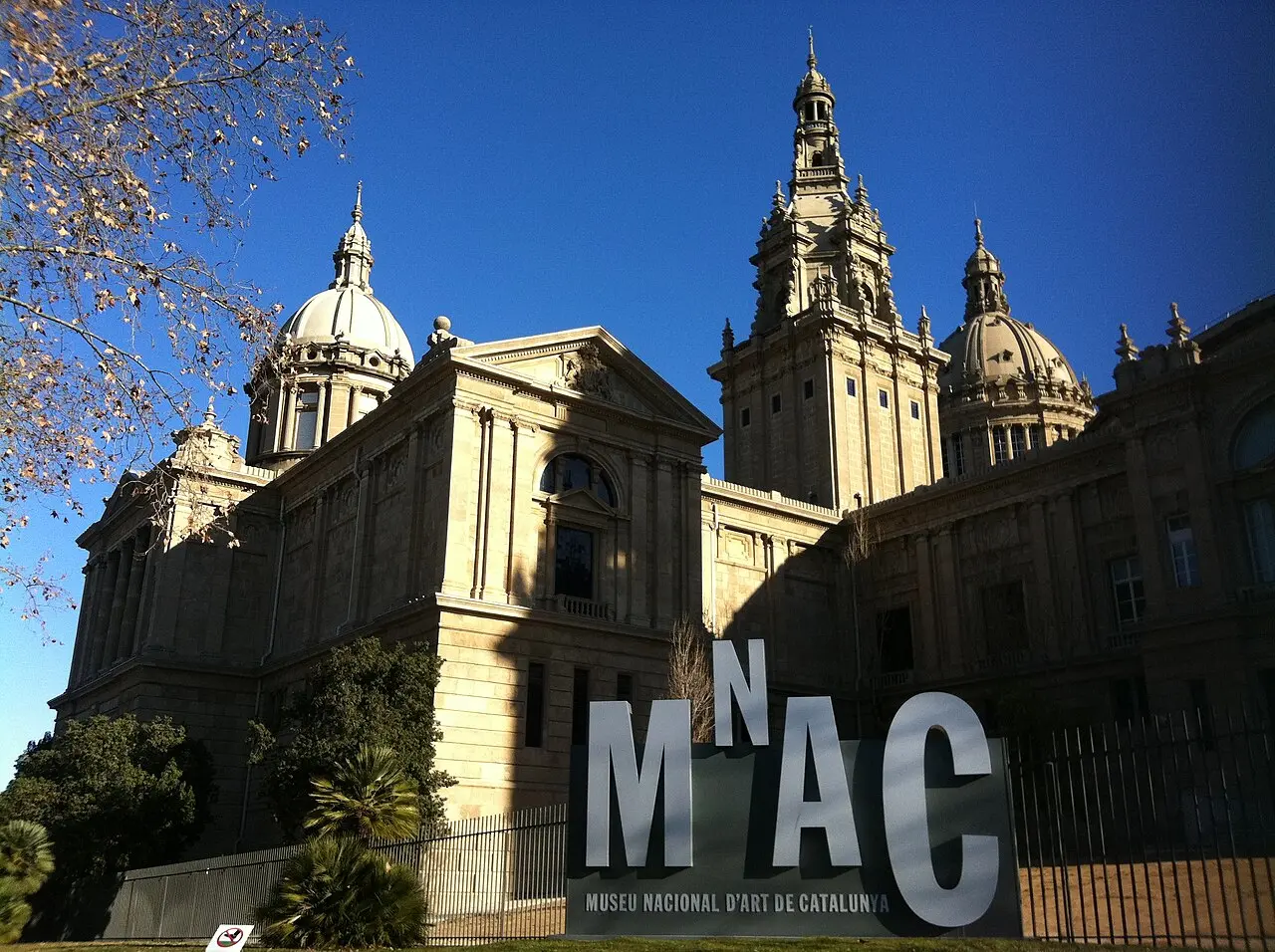
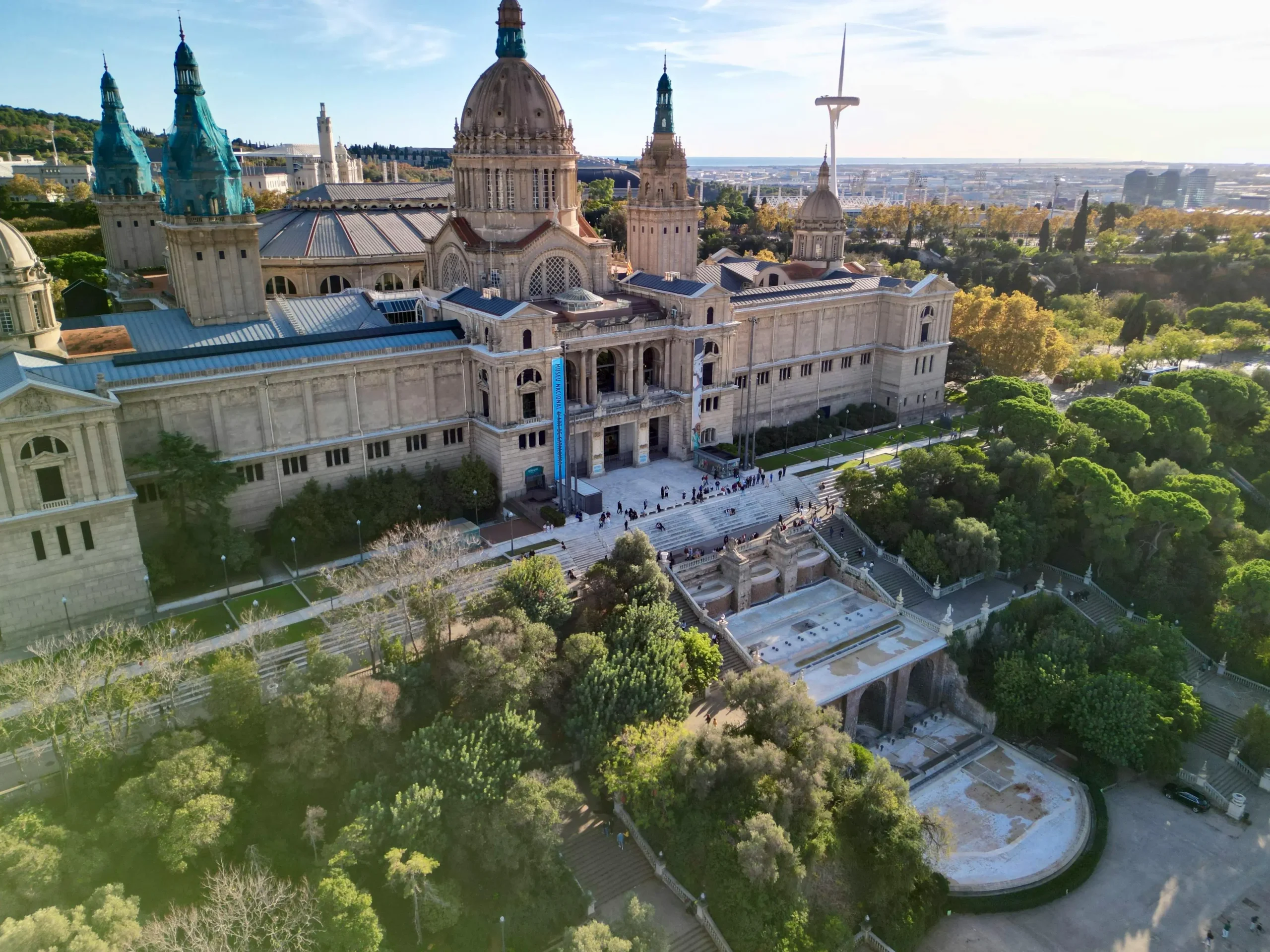
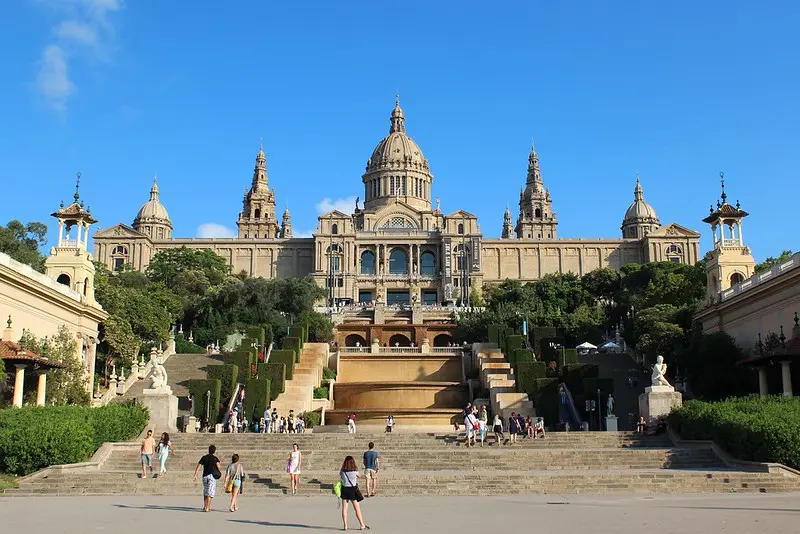
The museum is headquartered in the National Palace, an imposing building constructed in 1929 for the Barcelona International Exposition. This classicist-style palace was designed to impress, presiding over Avenida Reina Maria Cristina from the foothills of the Montjuïc mountain.
After the exhibition, in 1934, it originally opened its doors as the Museu d’Art de Catalunya to gather medieval collections. Over the decades, the institution evolved and expanded. In 1995, the Romanesque Art rooms were inaugurated, and finally, in 2004, the Modern Art collection was incorporated, consolidating the structure we know today.
The building itself is a work of art of nearly 50,000 m². Its facade stands out for a large dome inspired by that of St. Peter’s in the Vatican, and from its front courtyard, people can enjoy one of the best panoramic views of Barcelona.
The collections of the Museu Nacional d’Art de Catalunya: A journey through a thousand years of art
The MNAC offers people an unparalleled artistic journey spanning ten centuries of history. Its collection is immense, with a total inventory of 350,984 works, of which approximately 3,200 are on permanent display. The rest of the pieces, some 113,000, are zealously guarded in the reserve areas, where they are the subject of constant study, conservation, and restoration by specialist teams.
Romanesque Art: The heart of the museum
This section is internationally recognized for housing what is considered the best collection of Romanesque mural painting in the world. The works, dating between the 11th and 13th centuries, offer a unique and spiritual vision of European medieval art.
- Mural Painting and the strappo technique: The museum stands out for its impressive series of mural painting ensembles, mostly from small rural churches in the Pyrenees. These works were rescued at the beginning of the 20th century to prevent their plundering or deterioration using the strappo technique, which allowed the pictorial layer to be torn from the wall to transfer it to a canvas and, subsequently, mount it on structures that reproduce the original shape of the apses.
- The Pantocrator of Taüll: Within this collection, the famous “Pantocrator” or “Christ in Majesty” stands out. This key work from the 12th century was originally located in the apse of the church of Sant Climent de Taüll. His penetrating gaze and the strength of his colors are the maximum exponent of Romanesque symbology.
- Painting on wood: The collection includes a set of altar frontals and carvings that is considered unique in its kind in all of Europe, standing out for its exceptional state of conservation despite the fragility of the support.
Gothic Art
The Gothic collection ranges from the late 12th century to the 15th century, reflecting the period of greatest splendor and territorial expansion of Catalonia in the context of Mediterranean Europe.
- Great masters of the altarpiece: The rooms exhibit works by fundamental figures of Catalan Gothic art, such as Jaume Huguet, Lluís Dalmau, Bernat Martorell, and Lluís Borrassà, and the sculptors Jaume Cascalls and Pere Sanglada. These artists perfected the use of gilding and narrative detail in their compositions.
- Artistic variety and expansion: The tour allows you to appreciate the evolution not only of painting, but also of stone and wood sculpture, and the goldsmithing of the time. The collection also includes notable examples of European and Castilian artists, showing the rich cultural exchange of the moment.
Renaissance and Baroque
This collection presents a dialogue between Catalan art and the great European painters of these periods, allowing visitors to admire the evolution of realism and the use of light.
- Cambó Bequest and Thyssen-Bornemisza Collection: The collection is significantly nourished by works from the Cambó Bequest—a donation of high artistic value—and the Thyssen-Bornemisza Collection, which provides an international perspective.
- Masters of the Cinquecento: It includes pieces from the Italian quattrocento and masters of the cinquecento such as Sebastiano del Piombo, Titian (Tiziano), Rubens, and Verrocchio.
- Spanish Golden Age: Visitors can admire masterpieces of incalculable value, such as the “Saint Paul” by Velázquez, an “Immaculate Conception” by Zurbarán, and the “Martyrdom of Saint Bartholomew” by Ribera, known as ‘Lo Spagnoletto’, and fundamental pieces by El Greco.
Modern, Avant-garde, and Contemporary Art
This collection gathers a selection of the best Catalan art from the early 19th century to the 1940s, covering movements such as Neoclassicism, Romanticism, and Realism.
- Catalan Modernism: The museum is the world reference place to learn about the most representative artists of this movement. Here shines the genius of Antoni Gaudí with his furniture designs and the brush of Ramon Casas. Among the most iconic works is “The Vicarage” (La vicaria) by Marià Fortuny, a masterpiece of detailing.
- Avant-gardes and interior design: The tour includes pieces by geniuses who changed the course of art, such as Picasso or Miró. In addition, exceptional sets of interior design and decorative arts from emblematic buildings in Barcelona are preserved, such as the Amatller, Lleó Morera, and Batlló houses, allowing you to see how the bourgeoisie of the time lived.
- Other fundamental disciplines: The collection is completed with a vast collection of drawings, engravings, and posters. Especially noteworthy is the photography section with 40,000 images documenting social and artistic history, and a numismatics collection that exceeds 155,000 pieces, offering a historical journey through coins.
Plan your visit: MNAC practical information
Opening hours
The MNAC museum adapts its service hours according to the season to facilitate access to all people:
- From October to April: Tuesday to Saturday, from 10 am to 6 pm. Sundays and public holidays, from 10 am to 3 pm.
- From May to September: Tuesday to Saturday, from 10 am to 8 pm. Sundays and public holidays, from 10 am to 3 pm.
- Closings: The museum is closed every Monday (except specific public holidays), January 1st, May 1st, and December 25th.
Fares and free access
- General Admission: €12 (valid for two visits during one month from purchase).
- Basic Admission: €2. Allows access to the building and the Terraces-Viewpoint.
- Free admission: For people under 16 and over 65 years of age, as well as accredited disability card holders.
- Free hours for the general public: Saturdays from 3 pm, every first Sunday of the month, and open house days with advance online booking (such as September 11th or September 24th).
It is strongly advised to purchase tickets in advance to guarantee access. Ticket offices usually close 30 minutes before the rooms close.
How to get to the Museu Nacional d’Art de Catalunya – MNAC
The MNAC is connected by multiple means of transport so that anyone can arrive easily; here are the most common means of transport:
- Metro: Espanya station (L1 and L3).
- Bus: Number 55 drops you right at the museum door. The 150 and multiple lines to Plaça d’Espanya also arrive there.
- On foot: From Plaça d’Espanya, walking up Avenida Reina Maria Cristina and using the escalators that facilitate the ascent.
- Own vehicle: There is free parking for motorcycles and bicycles. Cars have blue and green zones available, with spaces reserved for people with reduced mobility near the main entrance.
- Montjuïc Cable Car: A spectacular option to discover the city from the air and arrive at the museum enjoying the most emblematic views.
Accessibility: A museum for everyone
The Museu Nacional d’Art de Catalunya is firmly committed to universal accessibility.
- Reduced mobility: The building has ramps, elevators, and lifting platforms. Wheelchairs can be requested on loan at the cloakroom.
- Visual impairment: In the lobby, there is a tactile model of the building and relief maps. There are tactile tables with audio descriptions in key rooms of the collection.
- Hearing impairment: The service counters and the library have a magnetic loop. There are also individual loops for audio guides.
- Signage: The floor has podotactile routing that guides people to the main information counters and services.
Singular spaces you cannot miss at MNAC
The National Palace of Montjuïc is not just a container for works of art; its own architecture houses corners that are, in themselves, milestones of Barcelona’s heritage. Touring these spaces allows you to understand the magnitude of the 1929 project and the evolution of artistic taste in Catalonia.
The Oval Room: The monumental heart of the museum
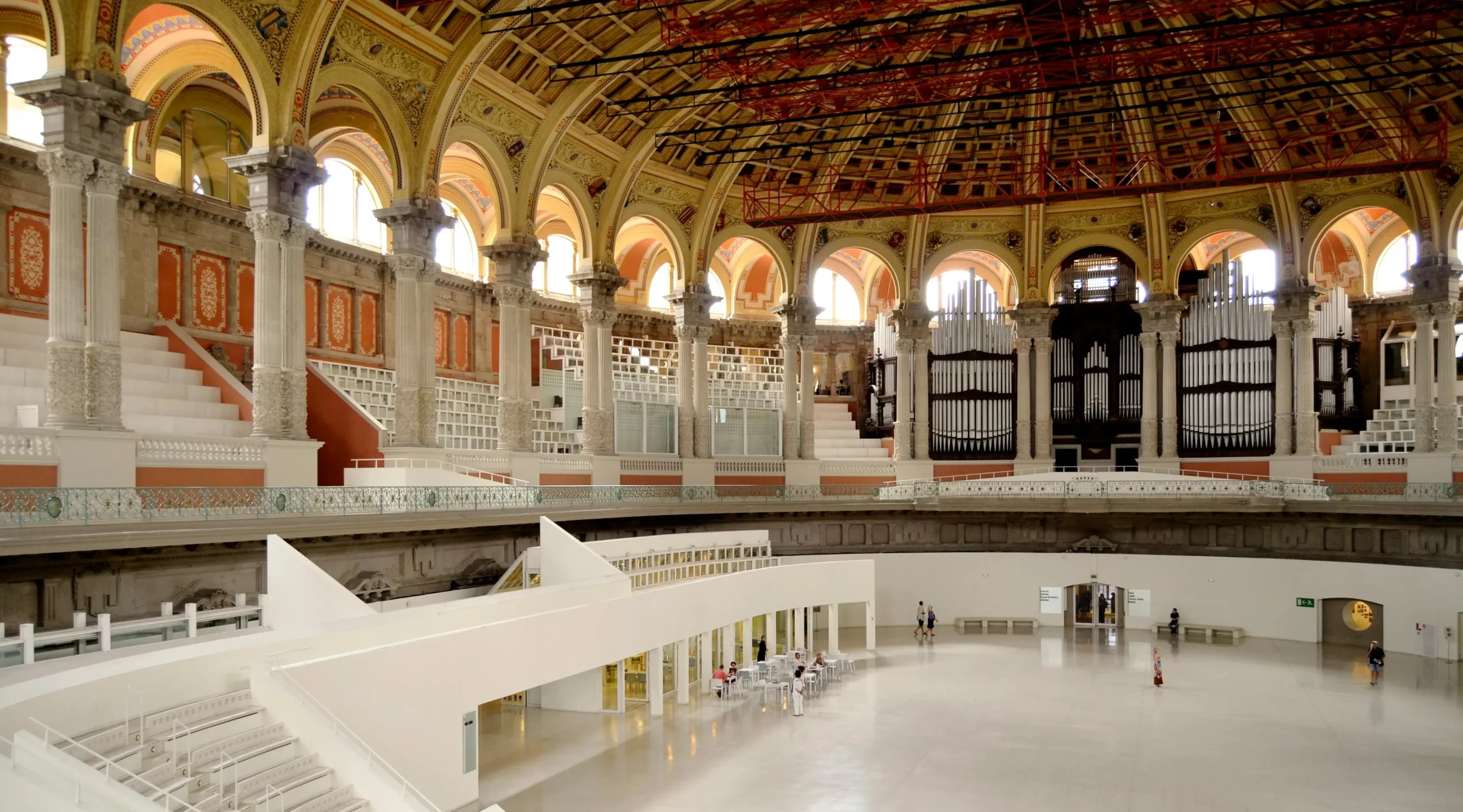
The Oval Room is undoubtedly one of the most impressive civil architecture spaces in Europe. With an area of 2,300m², it was conceived for large ceremonies and congresses during the 1929 International Exposition.
- The Great Organ: Presiding over the room is one of the largest organs in Europe. It is 34 meters wide and 11 meters high. Its original design sought to flood the entire Palace with music. Currently, the organ is not operational and is pending a restoration process valued at three million euros.
- The great dome: Its ceiling is an engineering feat of the time, allowing natural light to bathe this open space. The acoustics of the room are so particular that it has become a privileged place for large-format concerts and institutional events of maximum relevance.
- Fact for the visit: Being a multipurpose space, it sometimes houses contemporary art installations that contrast with its classic architecture, offering a fascinating visual dialogue for people walking through it.
The Dome Room: A display of artistic allegories
Located on the first floor, this room is the visual epicenter of the building. It is the point where architecture, mural painting, and sculpture from the early 20th century converge.
- Original mural paintings: The decorations of the dome are the original ones from 1929. In them, people can observe allegories of Catalan arts and letters, made by renowned artists of the time who sought to exalt the cultural identity of the country.
- Joan Miró’s mural: One of the great attractions is the mural by Joan Miró and Joan Gardy Artigas, titled “Mural for IBM”. This piece adds a note of color and radical modernity to the classic setting of the room, demonstrating the museum’s ability to integrate the avant-gardes.
- Modernist Sculpture: In this space, large-format sculptures are exhibited that serve as a transition to the modern art rooms, allowing you to appreciate the delicacy of human forms in materials such as marble and bronze.
The Sert Room: The mastery of international muralism
This room is dedicated exclusively to the work of Josep Maria Sert, one of the most sought-after mural painters of his time, known for decorating ceilings in New York’s Rockefeller Center or the League of Nations in Geneva.
- Large-format panels: The space exhibits the imposing panels that Sert originally designed for the ballroom of a British mansion (Waddesdon Manor). They are works of overwhelming visual force, executed with a unique technique of gold and silver on an oil base.
- Theme and style: The paintings show scenes of baroque and popular influence, with muscular figures and forced perspectives that create a sense of theatrical depth. It is a space that usually leaves people breathless due to its dramatic nature and its masterful use of chiaroscuro.
- Importance: It represents the international recognition of Catalan art and Sert’s ability to completely transform the atmosphere of an architectural space.
The Terraces-Viewpoint: Barcelona at your feet
To top off the experience, the museum offers access to its rooftops, transformed into a privileged viewpoint that allows you to understand the strategic location of the Palace on Montjuïc mountain.
- 360-degree vision: From this point, people can enjoy a complete panoramic view. To the north, the Avenida Reina Maria Cristina, Plaza de España, and the Tibidabo skyline are dominated. To the south, you discover the more natural side of the mountain and the Olympic facilities.
- Architecture up close: Going up to the terraces also allows you to closely observe the details of the towers and lateral domes of the building, appreciating the quality of the materials and finishes that are not perceived from the ground.
- A moment of pause: It is the ideal place to reflect on the visit, take pictures, and enjoy the surroundings. Access to the terraces is usually included in the general admission, although there is also a reduced basic ticket for those who only wish to enjoy the views and the architecture of the building.
Services and gastronomy of the Museu Nacional d’Art de Catalunya
The visit to the Museu Nacional d’Art de Catalunya transcends the mere contemplation of its galleries, offering people a comprehensive experience that combines aesthetic delight with comfort and academic rigor.
Aware of the diverse needs of those who visit it, the museum puts at their disposal a careful selection of dining spaces with unparalleled views, internationally renowned research centers, and personalized customer service. These resources are designed to turn each stay into a moment of pause, discovery, and comfort, ensuring that the infrastructure of the National Palace matches the excellence of its collections.
- Oval Café: Located in the heart of the Museum, it is the ideal place to enjoy a moment of rest having a coffee, a sandwich, a salad, or a set menu. Service hours are Tuesday to Sunday and public holidays, from 12:30 pm to 4 pm. Fridays and Saturdays from 7:30 pm to 11 pm.
- Absis Restaurant: Located on the first floor of the Museum, with access through the Dome Room. This restaurant, situated in the former Throne Room, offers a weekly menu and daily suggestions. In addition to its gastronomy, it stands out for offering privileged views of the city through its large windows.
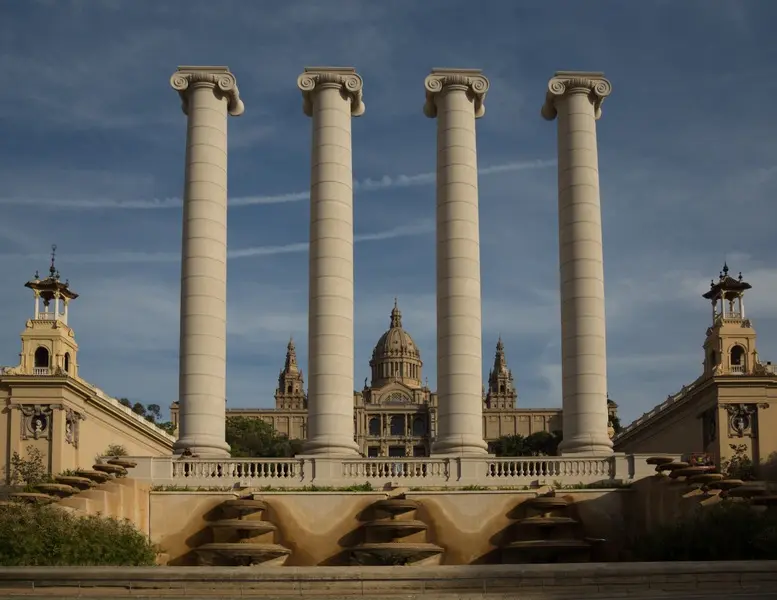
- Terrassa MNAC: Located at the entrance of the Museum, it offers open-air bar service. It is a privileged space to enjoy the views of Barcelona and the Magic Fountain of Montjuïc. Its hours may be modified depending on the fountain’s own shows.
- Joaquim Folch i Torres Library: Located on the first floor, it is a reference research and knowledge center. It has more than 150,000 art books and catalogs, as well as an extensive collection of magazines, manuscripts, and books published before 1500. Access is free for anyone interested in artistic research, upon accreditation with ID or passport.
- Shops: The Museum has two points of sale, one located in the Oval Room and another outside in front of the Terrassa Fresc. In them, you can find a great diversity of objects inspired by the collections, such as specialized books, stationery, textiles, prints, and games, ideal for keeping a souvenir of the visit.
- Archive: A fundamental resource for research that guards historical documents. To consult it, it is necessary to request an appointment by phone or email.
- Cloakroom and lockers: Service available at the Museum entrance so that people can leave jackets, backpacks, or umbrellas comfortably. In addition, free loans of wheelchairs, folding chairs, or baby strollers are offered at this point.
Rules for a pleasant visit at MNAC
To protect the works and ensure the well-being of all people, some basic guidelines must be followed:
- Conservation: Touching the works or entering the exhibition rooms with food or drinks is not allowed.
- Photography: Photos without flash for personal use can be taken in the permanent collection. The use of tripods is prohibited.
- Environment: You are requested to keep your voice at a moderate volume and your mobile phone on silent.
- Minors: People under 14 years of age must always be accompanied by an adult who is responsible for their behavior.
The Museu Nacional d’Art de Catalunya invites everyone to explore this cultural treasure. Whether to admire a 12th-century Romanesque fresco or an avant-garde piece, every corner of the National Palace offers an opportunity for emotion and knowledge. Visit Barcelona!