Barcelona is a city of contrasts, where historic relics coexist with the most avant-garde architecture. This duality is masterfully reflected in its kitchen. Traditional Barcelona gastronomy, while firmly anchored in its Mediterranean roots, evolves at a frantic pace, making the city one of the world’s culinary capitals.
The culinary offerings from world-renowned chefs have turned the art of dining into one of the main tourist attractions of the Catalan capital. Furthermore, hosting prestigious events, fairs, and gastronomic congresses, such as Forum Gastronomic Barcelona, reaffirms its position as a hub for business and innovation in the sector.
Still, the essence of the city lies in the typical dishes of Barcelona, which are essential to understanding the culinary culture that inspires even the most elite chefs. Based on fresh produce from the land and the sea—featuring fruits, vegetables, meats, fish, and the indispensable olive oil as the main star—Catalan cuisine is distinguished by its unique character.
While it is a must to visit some of the avant-garde or Michelin-starred restaurants in Barcelona, discovering traditional cooking is equally mandatory. Explore this guide to discover the essential dishes you must try during your stay to connect with the culture through your palate.
Flavors of the Land: Essential Appetizers and Starters
Catalan cuisine begins in the fields, using simple techniques that enhance the natural flavor of the ingredients. This is the cornerstone of Barcelona’s traditional gastronomy.
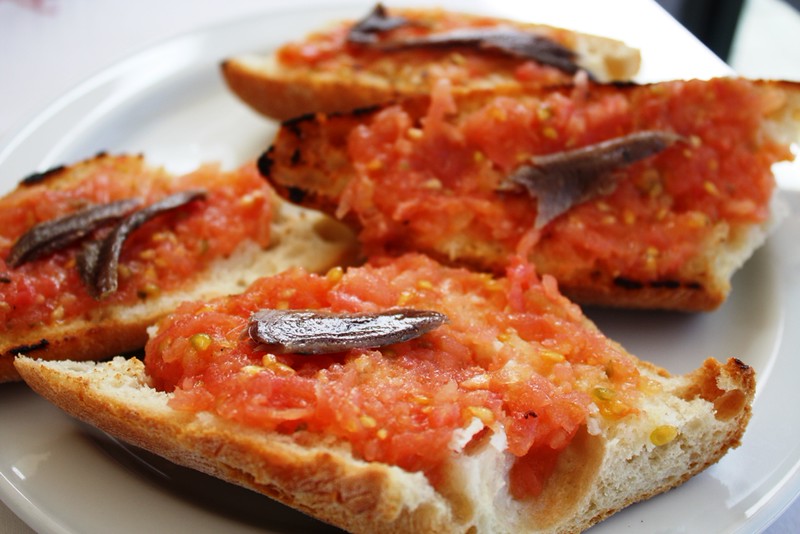
Tomato Bread (Pa amb tomàquet)
Though it may seem like a simple slice of bread, pa amb tomàquet is the true symbol of Catalan culinary identity. It consists of a slice of bread (toasted or not) rubbed with ripe tomato and/or garlic, a drizzle of extra virgin olive oil, and a pinch of salt. It is the perfect accompaniment for cured meats, cheeses, or simply to be enjoyed on its own. Its simplicity is the secret to the Mediterranean flavor.
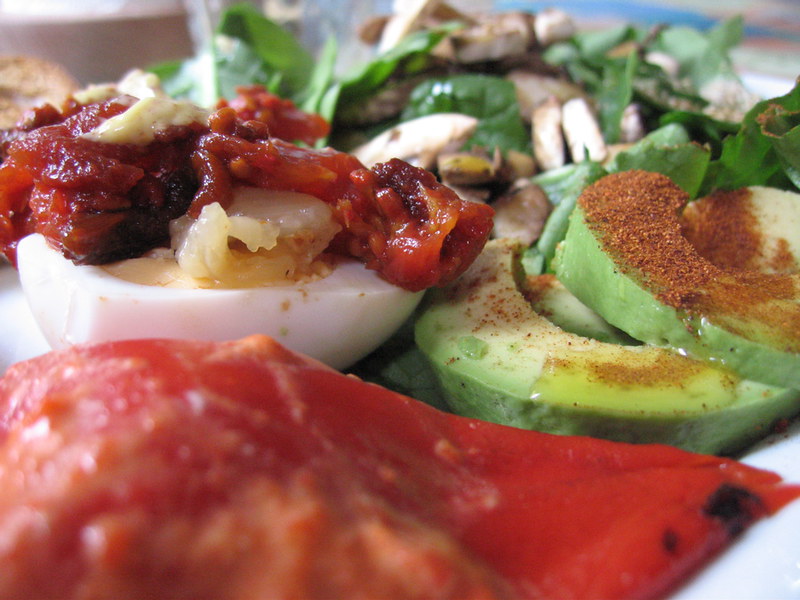
Escalivada
Escalivada is one of the oldest dishes in Catalonia and can be found in almost any traditional restaurant. It is a savory dish made with roasted peppers, eggplant, onions, and tomatoes cooked directly over the embers—hence its name (escalivar means to roast in the ashes). It is seasoned simply with oil and salt.
Versatility: It is usually served with anchovies but also serves as an excellent base to accompany meat or fish. It originates from the rural areas of Catalonia, Aragon, and Valencia, and the cooking technique remains very close to the original.
Calçots with Romesco Sauce: The Winter Feast
This is undoubtedly one of the most characteristic and famous dishes of the region, giving rise to one of Catalonia’s most iconic festivals: the calçotada.
The Product: Calçots are a variety of tender, sweet, elongated spring onions grown mainly in western Catalonia and harvested during the winter months. They hold a Protected Geographical Indication (PGI) status.
The Ritual: They are grilled over a flame until the outer layer is charred. You peel them with your hands and dip them generously into Romesco sauce. This sauce, typical of the Tarragona area, is made from roasted tomatoes and garlic, bread, almonds, hazelnuts, dried red peppers, and a dressing of olive oil, salt, and vinegar.
Main Courses: Surf and Turf (Mar i Muntanya)
Catalan cuisine masterfully combines coastal products with those from the inland, a fusion that defines many of its signature main courses.
Butifarra: The King of Sausages
Butifarra is another staple in the list of Barcelona’s typical gastronomy. It is a fresh or cooked sausage made from minced pork and seasoned with salt and pepper.
Types and Uses: There are two main types: fresh butifarra (or raw), which must be cooked (ideally grilled or served with legumes), and cooked butifarra (such as butifarra d’ou or black butifarra), which is eaten cold or used in stews.
The Classic: The most iconic dish is Butifarra with mongetes (sausage with sautéed white beans), a simple and hearty meal that represents traditional payés (peasant) cooking.
Fricandó: The Slow-Cooked Stew of Barcelona
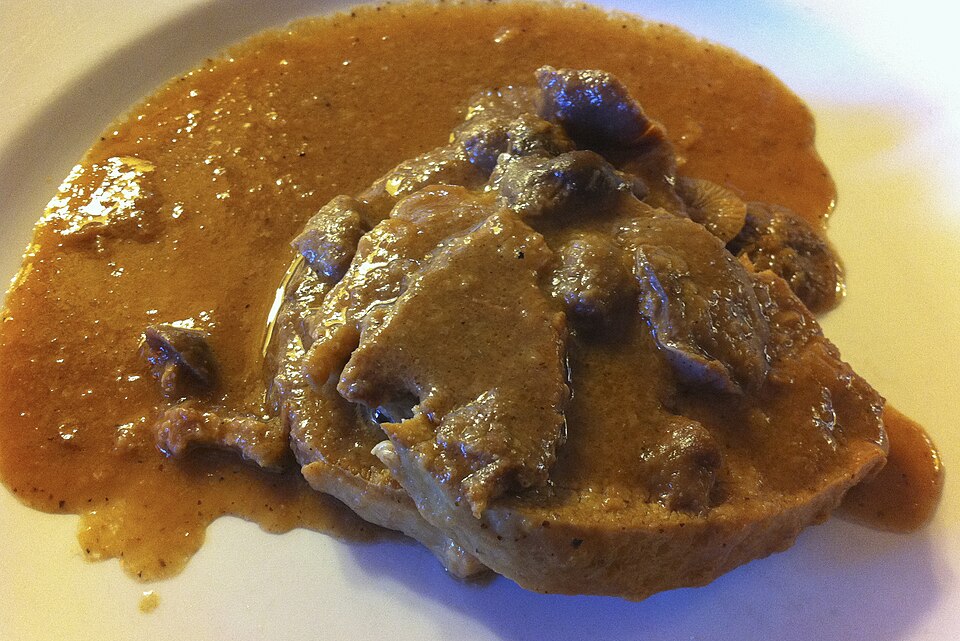
This dish is the quintessence of Catalan stewing. Fricandó is a beef stew slowly cooked with a delicious picada (a blend of almonds, hazelnuts, and parsley) and, most importantly, moixernons mushrooms (Saint George’s mushrooms), which give it its characteristic flavor. It is the perfect meal for the colder months.
Escudella i carn d’olla
Traditionally associated with Christmas, this stew is important enough to be enjoyed throughout the winter season. Similar to Madrid’s cocido, it is a complete meal served in two parts: first, the Escudella (a broth soup with large galets pasta), followed by the Carn d’olla (the meat and vegetables used to flavor the broth).
Barcelona-Style Fish
Given its coastal location, fish is essential. Suquet de peix is a fish and seafood stew (monkfish, sea bream, shrimp) cooked in a clay pot, often accompanied by potatoes and a picada that enriches the flavor of the sea. It is a dish that honors the maritime tradition of the Port and Barceloneta neighborhoods.
The Main Event: Rice Dishes and Paellas
While paella is originally from Valencia, Barcelona has adopted and adapted the art of rice, offering unique specialties thanks to its proximity to the sea. Discover the best rice dishes in Barcelona:
Arroz a Banda and Seafood Paella
In restaurants across the city, especially in Barceloneta, rice is the star. Paellas and brothy or creamy rice dishes are served, always using fresh ingredients. Arroz a banda (fish rice where the broth is prepared separately to intensify the flavor) and Arroz negro (black rice stained with squid ink) are very popular variations you shouldn’t miss.
Arroz del Senyoret: All the Seafood Flavor, Zero Effort
Another must-try specialty is arroz del senyoret (Gentleman’s rice). Similar to arroz a banda for its intense fish base, it has one unique feature: all the seafood is peeled and the fish is deboned. It is designed to allow you to enjoy all the flavors of the Mediterranean without ever needing to use your hands.
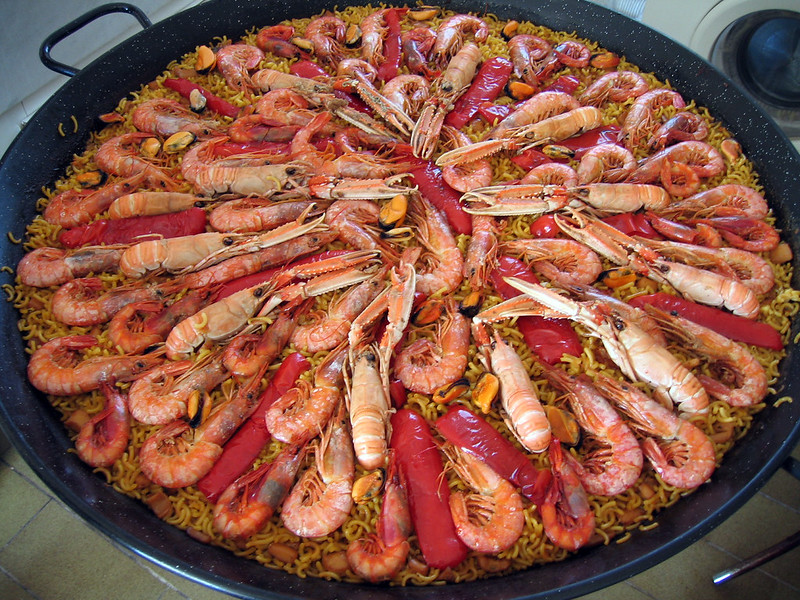
Fideuà
A close cousin to rice, Fideuà replaces the grain with short, thin noodles (fideos). The cooking process is similar to paella, resulting in a savory dish concentrated with seafood flavor. It is a very popular specialty along the Catalan coast.
The Sweet Finale: Barcelona’s Traditional Desserts
To finish the journey, Catalan confectionery is world-renowned, from simple creamy desserts to celebratory sweets. Discover typical Catalan desserts!
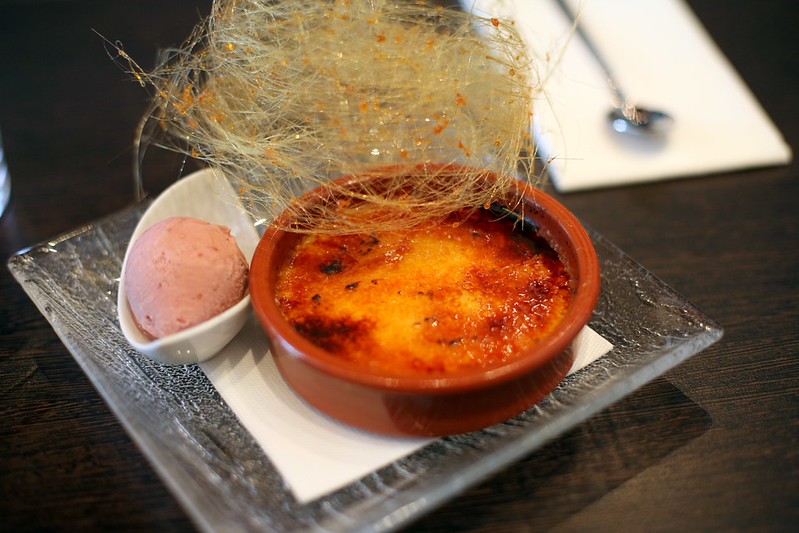
Crema Catalana
This is the Catalan dessert par excellence and the inspiration for the French crème brûlée. Crema Catalana is a custard made with egg yolks and milk flavored with cinnamon and lemon zest, topped with a layer of crispy caramelized sugar that must be cracked with a spoon. It is a sweet and light end to any meal.
Panellets
Typical for the All Saints’ Day holiday (the Castañada), Panellets are enjoyed throughout autumn and winter. These are small marzipan cakes, often coated in pine nuts, almonds, or coconut. They are an ancient, laborious tradition, ideal for accompanying coffee or Moscatell.
Mel i Mató
For those looking for a light, traditional dessert, Mel i Mató is the perfect choice. It consists of a portion of fresh cheese (mató, similar to ricotta) served generously drizzled with honey and sometimes topped with walnuts.
Wine Culture and Local Drinks
The gastronomic experience is complemented by the drinks that Catalonia produces with pride.
Cava and Wine
Catalonia is the birthplace of Cava, primarily produced in the Penedès region. It is the festive drink par excellence. Additionally, Designations of Origin (DO) such as Priorat, Montsant, and Penedès offer high-quality wines that pair perfectly with local cuisine. Be sure to taste Catalan wine!
Vermouth Hour
The vermouth tradition has experienced a massive revival in Barcelona. It is the drink that marks the midday aperitif, enjoyed on terraces or in traditional bars, accompanied by olives, chips, and tinned appetizers.
Avant-Garde Barcelona: The Culinary Evolution
The modernity of Barcelona is fully manifested in its culinary avant-garde. While tradition is the undeniable base, the city has established itself as a global benchmark thanks to chefs who have elevated local products to heights of insuperable innovation. Names like Ferran Adrià and his immense legacy, alongside Carme Ruscalleda or Jordi Cruz, have been the pillars that put the city on the map of haute cuisine with disruptive proposals and numerous awards.
Today, that prestige continues to grow with figures like Albert Adrià, whose creative genius continues to surprise the world, or the Torres Brothers (Sergio and Javier), who have achieved three Michelin stars at their restaurant Cocina Hermanos Torres. The absolute success of the restaurant Disfrutar—led by Eduard Xatruch, Oriol Castro, and Mateu Casañas—is also noteworthy; these three chefs, trained at the mythical El Bulli, hold three Michelin stars and propose a cuisine that is pure emotion and sensory surprise.
The excellence continues with Jordi Artal at Cinc Sentits (two Michelin stars) and Raül Balam at Moments (two Michelin stars). We also cannot overlook Nandu Jubany, a benchmark who has masterfully combined traditional memory with the most vibrant modernity. These names ensure that every visit to Barcelona is a limitless gastronomic adventure.
When visiting Barcelona, we invite you to experience both the authenticity of a tavern serving butifarra con mongetes and the creativity of a tasting menu in the Eixample. HCC Hotels invites you to immerse yourself in this fascinating journey of flavors, making your stay a complete and memorable culinary experience.