Barcelona is world-renowned for its historical heritage, its beaches, and its cultural offerings, but it also houses one of the most important and avant-garde science dissemination temples in Europe: the CosmoCaixa Science Museum. This space, managed by the La Caixa Foundation, proposes a fascinating journey through the mysteries of the universe, biological evolution, and the laws of physics through interactivity, turning the visit into a highly enriching experience for people of all ages.
If you are planning a getaway to the Catalan capital and wish to include a stop that combines learning, wonder, and entertainment, CosmoCaixa is an ideal option. From HCC Hotels, we offer you this detailed guide with all the information of interest, from the history of the unique building to the practical details of accessibility, transport, schedules, and the best permanent and temporary installations that you cannot miss this year 2026.
A historic building that educates in sustainability
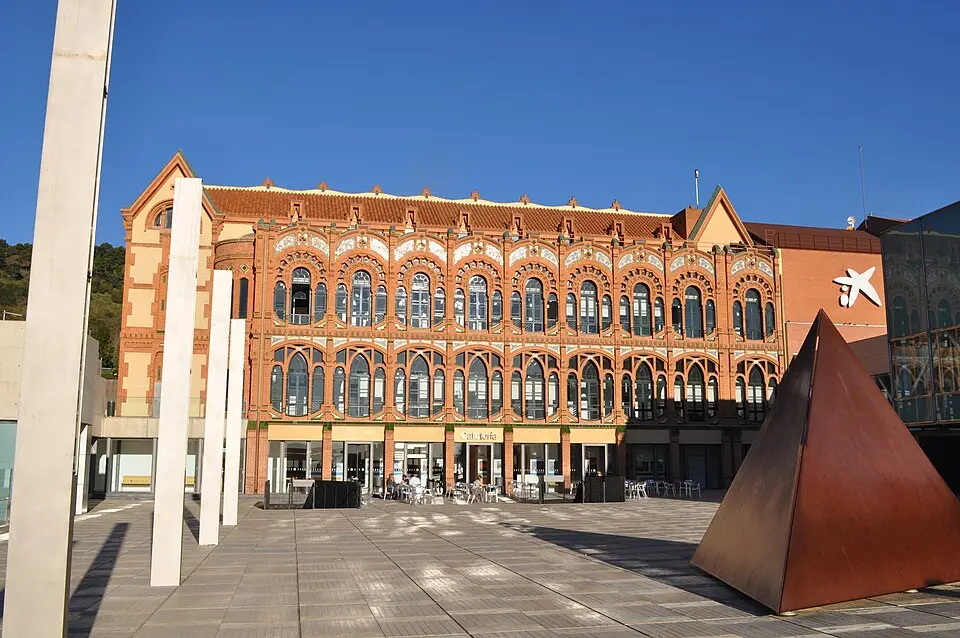
The container of CosmoCaixa is, in itself, a work of art and a manifesto of ecological responsibility. The current facilities, which occupy more than 30,000 square meters entirely dedicated to science, are set upon a heritage jewel with a lot of history.
The original building was designed in 1904 by the famous modernist architect Josep Domènech i Estapà to house an asylum for the blind, a function it proudly performed for 75 years. At the end of the 1970s, the ”la Caixa” Foundation acquired the property and entrusted a deep remodeling to architects Jordi Garcés and Enric Sòria, allowing the first interactive science museum in Spain to open its doors in 1981.
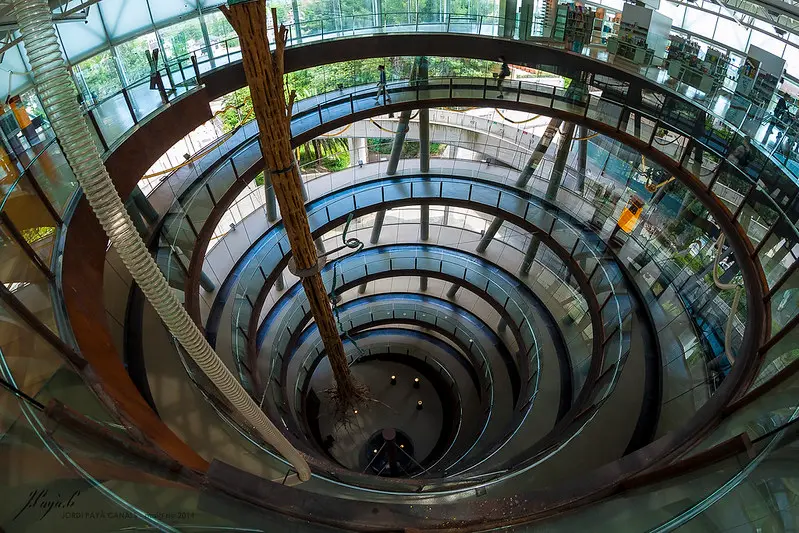
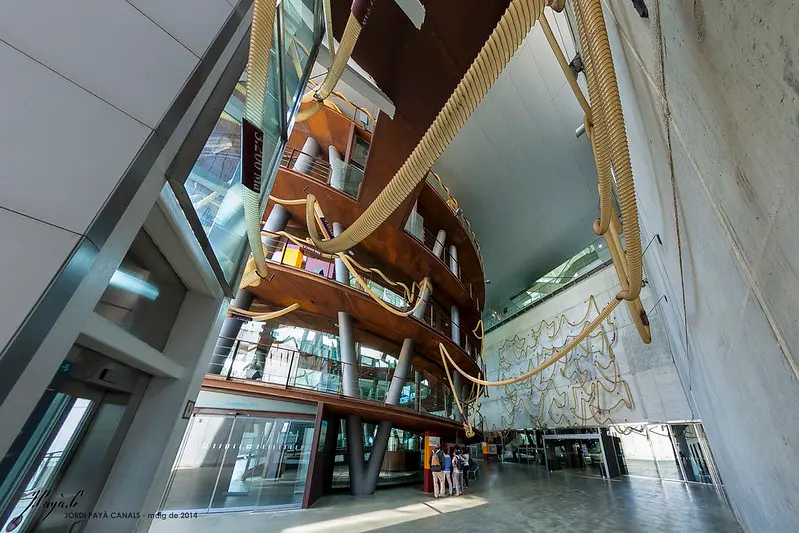
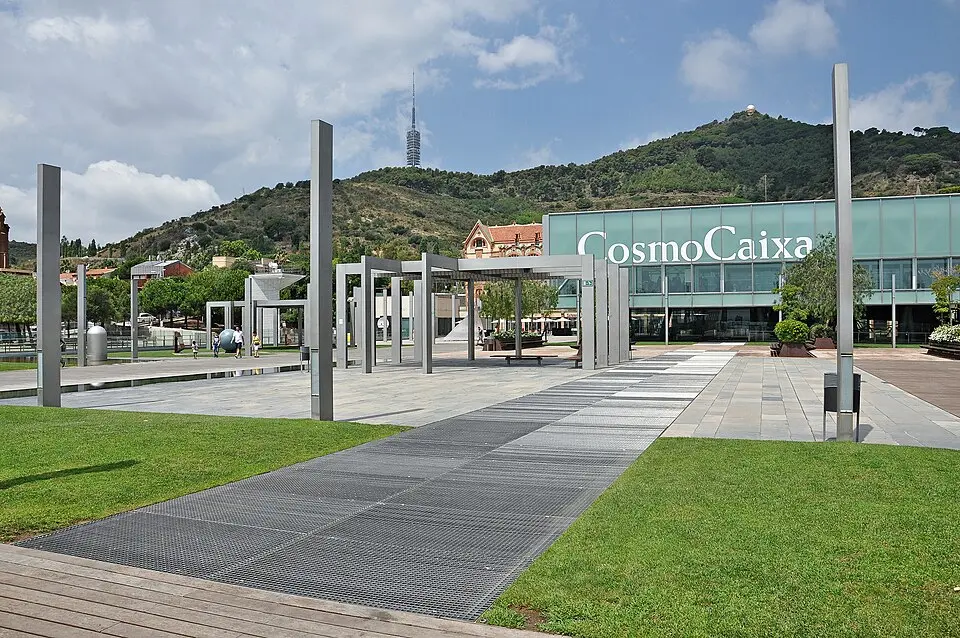
The great quantum leap of the infrastructure occurred with the ambitious transformation that took place between the late 90s and 2004, led by architects Esteve and Robert Terradas. This intervention not only respected and integrated the original pre-modernist construction, but also buried the colossal new exhibition halls, connecting them via a helical glass ramp and crowning the complex with the immense Science Square. Thanks to this remodeling, the center positioned itself at the international forefront and received the prestigious European Museum of the Year Award in 2006. In 2021, its capacity for reinvention was rewarded again with the Kenneth Hudson Award for its constant, endless contribution to society.
Today, under the premise that “good architecture implicitly carries sustainability,” CosmoCaixa functions as a showcase for eco-management through its cross-cutting project “Green building, building that educates”. The center holds top-level environmental certifications, such as the European EMAS registry and the international ISO 14001:2015 standard in environmental management, as well as ISO 50001:2018 in energy management. The building itself is used as an educational tool through six major environmental action lines:
- Energy efficiency and self-generation: The Smartflowers photovoltaic system installed in the Science Square stands out, producing up to 6,000 kWh of renewable energy annually for the self-consumption of the facilities.
- Water efficiency: Advanced systems to reduce and optimize water use to the maximum in all its facilities.
- Biodiversity and resilience: Spaces designed to favor urban fauna, such as a large insect hotel that shelters invertebrates essential for the urban ecosystem and an urban wall, a vertical garden created in 2018.
- Sustainable construction: Respectful integration and low-impact materials.
- Waste and environmental footprint: Strict recycling points and resource optimization. In this sense, the square houses an organic hydroponic garden that generates a large part of the plant food consumed daily by the biological inhabitants of the Flooded Forest.
What to see in CosmoCaixa: permanent exhibitions
The museum’s fixed collections are designed under the motto of interactivity. Here, touching is not forbidden; people are invited to experiment with their own hands to understand the laws of nature.
Universe Room
Completely converted in 2019 after a major conceptual remodeling, the Universe Room is the heart of the museum. Its design plays with architectural transparency and uses well-defined color codes to compartmentalize a journey that starts from the Big Bang and reaches the latest frontiers of human knowledge. The room is structured into three major areas:
- Kósmos (Red Area): Welcomes visitors with a spectacular three-dimensional graphic simulating the expansion of the universe. Here, people explore how matter organized itself since the beginning of time, experimenting with modules dedicated to quantum physics, subatomic particles, light waves, the periodic table, plate tectonics, and the mechanics of the Earth’s position relative to the Sun.
- Evolution (Green Area): Guarded at its entrance by a bioreactor, this sector reveals the secrets of life on our planet. It brings together living beings, stereoscopic photographs, highly beautiful fossils, and state-of-the-art digital reproductions that explain the evolutionary mechanisms of species and the environmental impact derived from human actions on Earth.
- Frontiers (Blue Area): Presided over by an impressive brain-shaped dome, this space delves into the most complex object in the known cosmos: the human brain. Visitors discover how this organ allows us not only to formulate abstract questions about universal laws, but also to design robots, develop writing, and structure complex languages.
As a complement within the same room, you can find the Lab Math, an interactive laboratory dedicated to mathematics. Inspired by the educational spirit of Lewis Carroll and Martin Gardner, it proposes an infinity of routes with logic games, volumetric puzzles, three-dimensional mazes, and geometric riddles. Its purpose is to awaken the creative side of mathematics and reflect on whether this discipline is a language we invented to describe nature or if both share an intrinsic invisible beauty that only art can manifest.
The Flooded Forest
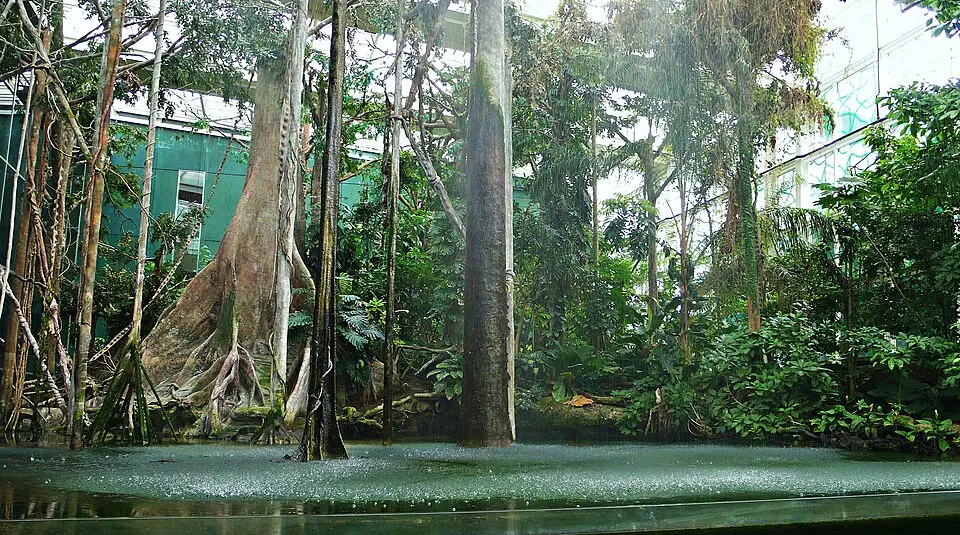
Undoubtedly, the most emblematic, immersive, and beloved installation by the CosmoCaixa public is The Flooded Forest. It is a faithful and meticulous recreation of one thousand square meters of an Amazonian tropical rainforest, taking the exact region of Santarém, in Brazil, as a reference. This ecosystem is of extreme fragility and richness, as the periodic flooding of the rivers keeps the soil submerged underwater for up to eight months a year.
The space allows people to contemplate the Amazon from multiple visual perspectives: underground, underwater, at ground level, and from the surface. In this living fragment of the jungle, more than a hundred representative species of plants and animals live, among which caimans, boas, giant tropical fish, brightly plumaged birds, leaf-cutter ants, and friendly capybaras stand out.
For total immersion, an automated system generates an authentic tropical rain every 15 minutes, regulating environmental humidity. It is worth noting that the museum has official Zootechnical Center certification and is part of the Iberian Association of Zoos and Aquariums (AIZA). All faunal management follows a rigorous Animal Welfare Plan of Excellence coordinated with the ZAWEC center linked to the Autonomous University of Barcelona, ensuring that the animals’ environment faithfully reproduces their wild conditions.
Remains and Traces
Located as a complement next to the Geological Wall, this space is entirely dedicated to paleontology and the fascinating processes of fossilization. It allows visitors to admire exceptional remains of animals and plants, as well as biological footprints printed on fine sedimentary rock, such as the mark left by a horseshoe crab walking 150 million years ago or footprints of dinosaurs and primitive birds from more than 30 million years ago.
The undisputed jewel in the crown of this section is “Jorge Caridad”, a truly extraordinary piece of Dominican amber found in 1995 in the Palo Quemado mine. Despite measuring barely eight centimeters, this 25-million-year-old fossilized resin encloses a frozen prehistoric scene inside: nearly a hundred ants of the species Technomyrmex caritatis in various stages of development, distributed into 35 workers, 26 larvae, 16 pupae, and 20 eggs.
Likewise, the exhibition displays large-format pieces recovered from the museum’s scientific warehouses or recently acquired, such as the skeleton of an ichthyosaur (Stenopterygius quadriscissus), the fossilized head of the Cretaceous predatory fish Xiphactinus audax, a giant armadillo (Holmesina septentrionalis), and a perfectly defined fossil palm leaf (Sabalites).
El Muro Geológico
This colossal outdoor and indoor installation consists of seven spectacular cuts of real rock with a combined length of 24 meters and a weight exceeding 90 tons. Each block illustrates a fundamental geological process that has shaped the Earth’s crust and topography throughout the eras.
The pieces come from various points around the globe and illustrate both internal processes (volcanism, tectonic folds, and faults) and surface processes (weathering, erosion, and sedimentation by agents such as water or wind):
- Potash salts from Súria and slates from León: Direct witnesses to the immense forces of compression and folding that rocks undergo beneath the surface.
- Puig-Reig Sandstone: Clearly shows the joints or fractures in the stone.
- Glacial varves from Itú: Thin sedimentary layers originated at the bottom of a prehistoric glacial lake in Brazil.
- Fossil dunes from Palma: Formed by calcium carbonate from animal shells, typical of Balearic sandstone stone.
- Volcanic clays from Olot: They show the activity of the Croscat volcano.
- Stone block from Crespià: A perfect example of a geological fault, visible when the ground shifts and the rigidity of the rock causes a clean fracture.
Each rock section is accompanied by an ingenious interactive experimental module that allows people to reproduce on a small scale the physical phenomenon that originated that specific geological structure.
The Most Beautiful History of the Cosmos
Distributed longitudinally over 900 meters through different rooms of the museum using the so-called “Strip of Life,” this exhibition proposes a chronological journey of 4.5 billion years through 27 fundamental evolutionary milestones.
Each step taken by visitors is equivalent to five million years of Earth’s history. The route starts with a meteorite fragment as ancient as our own solar system and advances by showing stromatolites, primordial single-celled algae, the first soft-bodied multicellular beings, the conquest of dry land by plants, chitin arthropods, primitive fish, the origin of flowers, the dominance of dinosaurs, the diversification of mammals after the great extinction, and the appearance of hominids up to Homo sapiens. The fossils and illustrations act as real witnesses of biological adaptations, cooperations, and extinctions.
Base Antártica
This unique space pays tribute to research in the most extreme environments on the planet, recreating the original laboratory of the Juan Carlos I Antarctic Base. The installation highlights the work and scientific vision of Dra. Josefina Castellví, an absolute pioneer of Spanish exploration on the white continent.
Thanks to a strategic collaboration agreement with National Geographic, the area is complemented by an impressive collection of large-format photographs depicting polar biodiversity (emperor penguins, leopard seals, cetaceans) captured by internationally renowned photographers such as Paul Nicklen, Frans Lanting, and Cristina Mittermeier. In addition, it includes historical graphic testimonies from the golden age of polar exploration at the beginning of the 20th century, recalling the hazardous expeditions of legendary captains like Robert Falcon Scott aboard the Terra Nova, Roald Amundsen, or the famous journey of the Endurance captained by Ernest Shackleton.
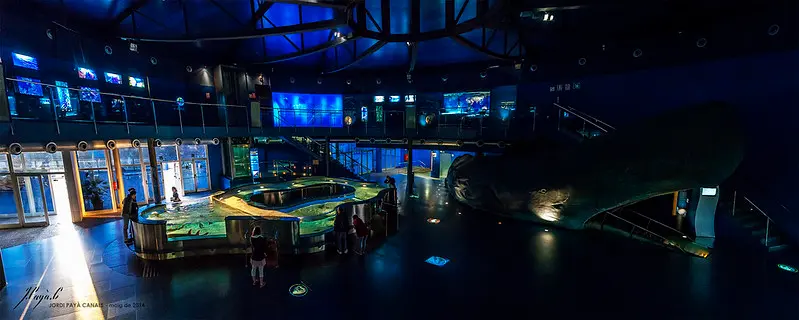
Temporary Exhibitions 2026 at CosmoCaixa in Barcelona
CosmoCaixa constantly renews its cultural offer with activities and screenings of the highest international level. During this 2026 season, the main highlights are as follows:
Exhibition: “Extraterrestres. Is there life outside Earth?”
- Dates: Available from February 26th, 2025, until August 30th, 2026.
- Content: An ambitious exhibition exploring humanity’s millennia-old fascination with the possibility of living beings in other corners of the cosmos. Commissioned and produced by the ”la Caixa” Foundation based on an idea by prominent astrophysicists and biologists such as Dra. Montserrat Villar Martín, Eva Villaver, Ester Lázaro, and Benjamín Montesinos, the exhibition combines scientific models, interactives, real pieces, and spectacular audiovisual material. It is divided into five conceptual areas: Here we live (the size of the cosmos), Between zero and infinity (the scientific and philosophical debate), Fiction versus reality (the vision of art, cinema, and literature), The search, and Are we alone? (future communication methods).
- Complementary activities (available until September 7th, 2026): Includes a fun Escape Room titled “Rescue on the Moon,” specialized guided tours, and spaces for mediation and autonomous learning.
CosmoCaixa Planetarium
Equipped with a modern fulldome projection system (full dome), the Planetarium offers an immersive and enveloping experience with an astronomical program of great technical level. Projections are originally held in Catalan, but the center has a complete simultaneous translation system via headphones into Spanish, English, and French, as well as audio description systems. The billboard for the coming months includes:
- Kiru and the mystery of the lost Moon: Oriented to children between 3 and 6 years old, it tells the tender story of Chispita the firefly and her friend Kiru discovering lunar secrets and managing the fear of the dark. (Until September 6th, 2026).
- 3Eclipses: A spectacular immersive projection detailing the science and cultural impact behind the historic total solar eclipses that can be sighted directly in Spain during the years 2026, 2027, and 2028. (From June 26th to September 6th, 2026).
- Postcards from other worlds: A fascinating journey designed for ages 6 and up that proposes a walk through the planets and satellites of our solar system. (Until September 6th, 2026).
- Black Holes: Recommended from 12 years old, it explores the physics and mysteries of the strangest celestial bodies in the cosmos arising from violent stellar explosions. (Until June 23rd, 2026).
- Dark Biosphere: A fulldome exploration through the depths of the Earth’s crust, discovering how life subsists and thrives in the most extreme environmental conditions on the planet. (Until June 19th, 2026).
Important note for the Planetarium: Seats are numbered and it is essential to arrive at least 10 minutes in advance, since once the projection has started, access to the room is strictly prohibited for visual safety reasons.
Practical information to plan your visit to CosmoCaixa Barcelona
To help you organize your day at CosmoCaixa in the most comfortable way possible, here is all the essential practical data compiled from the center:
Contact details and location
- Address: Carrer de Isaac Newton, 26, 08022, Barcelona (Upper area, Sarrià-Sant Gervasi district at the foot of Tibidabo).
- General information telephone: 932 126 050.
- Email addresses: icosmocaixa@magmacultura.com (User support) and rcosmocaixa@magmacultura.com (Group reservations for more than 10 people and schools).
Opening hours
- General hours: Monday to Sunday and public holidays, from 10:00 am to 8:00 pm.
- Annual closing days: The museum remains closed on December 25th, January 1st, and January 6th.
- Special reduced hours: On December 24th, December 31st, and January 5th, the center opens from 10:00 am to 6:00 pm.
- Ticket sales: Ticket counters close 30 minutes before the museum closing time.
Prices and free admission
- General admission to the museum: €8 (Allows free access to all permanent and temporary exhibitions of the center).
- Admission to activities and Planetarium: It is necessary to check the specific prices for each workshop or screening on the official website. Remember that to carry out any activity or enter the Planetarium, it is mandatory to also purchase the general admission ticket to the museum beforehand.
- Totally free admission:
- CaixaBank clients (properly proving their status).
- Minors under 16 years old (boys and girls making a free visit, excluding school groups).
- Days of the year with open-door sessions (Free entry for all audiences):
- February 15th: On the occasion of the Santa Eulàlia festivities (co-patron saint of Barcelona).
- May 18th: Celebration of International Museum Day.
- September 24th: La Mercè festivities (patron saint of the city).
How to get to CosmoCaixa?
- By Ferrocarrils de la Generalitat de Catalunya (FGC): Line L7, traveling to the terminus station of Av. Tibidabo. From there, you can walk enjoying the residential environment or connect with local buses.
- By urban bus (TMB): The metropolitan lines of the means of transport in Barcelona H2, H4, V17, V15, V19, V13, 196, and 123 make stops very close to the center’s accesses.
- By road (Private car): If you travel in your own vehicle, the fastest access is made by taking exits number 6 or 7 of the Ronda de Dalt (B-20).
Parking services
- Free bicycle and scooter parking: CosmoCaixa promotes sustainable mobility by offering free parking with 12 spaces for bicycles and 10 spaces for electric scooters located right next to the main access to the complex.
- Underground public car park: Saba – CosmoCaixa parking, located at Carrer dels Quatre Camins, 89. It remains open from 7:00 am to 11:00 pm (Tel. 932 537 488). On the surrounding streets there is also the option of regulated parking in the green zone and blue zone.
- Coach parking: There is an area reserved exclusively for the boarding and alighting of passengers on the side of the Ronda de Dalt (in the Besòs direction, in the section between Carrer de Balsareny and Carrer del Císter).
Museum services, accessibility, and center rules
CosmoCaixa stands out for being an inclusive space, designed to ensure that everyone enjoys scientific culture under equal conditions.
Universal accessibility
- Motor disability and reduced mobility: The building is 100% accessible by wheelchair. All entrances and corridors lack architectural barriers, there are elevators connecting the different levels, adapted toilets on all floors, and reserved parking spaces in the underground car park. The main information point has a free wheelchair loan service (subject to availability).
- Visual disability: The museum has complete podotactile paving (guidance strips on the floor) that leads safely from the main entrances to the Planetarium room and lower areas. Likewise, adapted guided tours with audio description are organized, and the Planetarium screenings feature narrative audio systems.
- Hearing disability: The center offers adapted visits with magnetic induction loops, adaptations of audiovisual content in Catalan Sign Language (LSC), and the possibility of requesting professional sign language interpretation services.
- Intellectual disability: Specific adapted itineraries and visits are designed, making accessible guides available to the public in PDF format or editable PowerPoint files to prepare for the visit in advance.
Dining and shopping services
- Laie – CosmoCaixa Shop: An ideal corner to purchase popular science books, brain teasers, educational toys for boys and girls, and museum souvenirs. It opens Monday to Friday from 10:00 am to 8:00 pm, extending its hours on weekends and public holidays until 8:30 pm (Tel. 932 537 487).
- Café-Restaurant: The ideal option for a culinary break. The cafeteria opens Monday to Sunday from 9:00 am to 8:00 pm, offering breakfast, coffee, and sandwiches. For its part, the restaurant service offers set menus and lunches Monday to Friday from 1:00 pm to 4:00 pm, and on weekends and public holidays from 12:30 pm to 4:00 pm.
- Space rental: For companies and institutions looking for a different environment for scientific or social events, the museum rents state-of-the-art, perfectly equipped facilities, outstandingly the large Auditorium – Ágora (for concerts and lectures) and various Multipurpose rooms adaptable for practical workshops.
Key rules of the center and local tips
- The importance of warm clothing: For technical conservation reasons, the permanent and indoor exhibition halls are kept at a constant temperature of 21 ºC throughout the year. During hot summer days in Barcelona, the thermal contrast can be remarkable, so it is highly recommended that people bring a light item of warm clothing to complete the tour in comfort.
- Accompaniment of minors: All minors under 16 years old must enter and remain inside the premises accompanied obligatorily by their legal representative or a responsible person. Center staff reserve the right to request identity documents to verify ages at entrances.
- Baby strollers: The access and movement of children’s strollers is fully permitted inside all exhibition rooms, facilitating logistics for families traveling with small children.
- Prohibited vehicles: Access to the interior of the facilities with bicycles or scooters for personal use is not allowed under any circumstances.
- Free educator service: From Monday to Sunday, the museum’s rooms have a professional team of educators who attend to the public’s questions, doubts, and curiosities completely free of charge, helping to deepen the understanding of the interactive modules.
Summary table for your visit to CosmoCaixa
CosmoCaixa Barcelona represents the perfect balance between the city’s monumental past and its projection towards a sustainable and innovative future. By entering its rooms, you will not only spend a fun day experimenting with the mysteries of the cosmos, but you will also participate in a conscious project that cares for the planet while stimulating the collective knowledge of society. Enjoy the experience and awaken your scientific curiosity!
| Concept | Key Data |
| Location | Carrer de Isaac Newton, 26, 08022 Barcelona |
| General Hours | Monday to Sunday and public holidays from 10:00 am to 8:00 pm |
| General Rate | €8 (Includes permanent and temporary exhibitions) |
| Free Admission | CaixaBank Clients / Minors under 16 years old / Open doors (15/02, 18/05, and 24/09) |
| Public Transport | FGC: Av. Tibidabo (L7) / Buses: H2, H4, V17, V15, V19, V13, 196, 123 |
| Parking | Bikes (12 spaces free) / Scooters (10 spaces free) / Cars: Underground Saba car park |
| Star Installation | The Flooded Forest (Living Amazonian jungle of 1,000 m²) |
| Climate Control | Constant temperature of 21 ºC all year round (Light warm clothing is advised) |
In short, stepping into the halls of CosmoCaixa in Barcelona is much more than enjoying an afternoon of cultural leisure; it is participating in a living and conscious project that inspires society through knowledge and respect for the environment. From the spectacular tropical immersion of The Flooded Forest to the endless logical riddles of Lab Math, the museum succeeds in making science stop being a theory in books and become a tangible, exciting experience within everyone’s reach.
Whether you visit the city with your family, as a couple, or individually, we encourage you to save a space in your itinerary for this oasis of dissemination at the foot of Tibidabo. Do not forget to plan your day in advance, review the Planetarium billboard and, above all, let yourself be guided by curiosity. Barcelona awaits you in this year 2026, ready to reveal the most beautiful secrets of the cosmos. Enjoy your scientific journey!