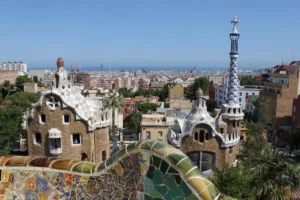
Barcelona is a city of infinite contrasts, a global destination that dazzles millions of people every year with the majesty of the Sagrada Familia, the Ramblas, or the maritime charm of Barceloneta. However, beyond the conventional tourist circuits and the postcards that flood social networks, the Catalan capital guards an invisible map of hidden treasures. They are corners that have survived the passage of centuries, sheltered by the silence of their walls, by the layout of narrow streets, or by the vegetation of gardens that seem suspended in time. Would you like to discover secret places in Barcelona?
If you travel with curiosity as your compass, discovering these spaces means accessing the true essence of the city. It is an invitation to read Barcelona between the lines, to listen to the echoes of its Roman, medieval, and modernist past without the haste or crowds of the major attractions. If you are passionate about history, unique architecture, and those small mysteries that give soul to a metropolis, we propose a detailed tour through ten of the city’s best-kept secrets. Prepare comfortable shoes, sharpen your gaze, and get ready to discover a Barcelona that very few people have the privilege of knowing.
1. Monastery of Sant Pau del Camp: The hidden Romanesque of the Raval
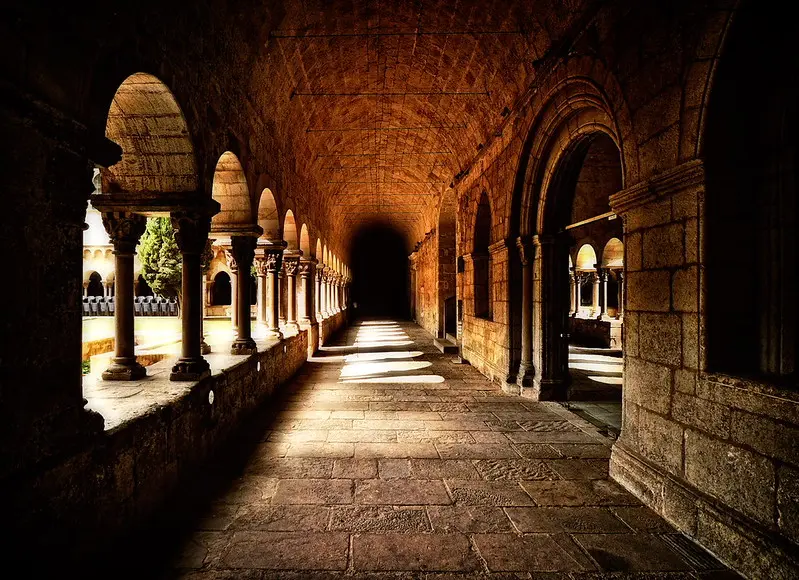
In the heart of the multicultural Raval neighborhood, sheltered by walls that seem to contain the outside bustle, stands the Monastery of Sant Pau del Camp. This small complex is not only an unprecedented haven of peace in one of the most dense areas of the city, but it also holds the title of being the oldest Romanesque building in Barcelona, with documented origins dating back to the distant 9th century.
What makes this monastery truly unique in the context of Western Europe is its cloister. Upon crossing the threshold, visitors find themselves before an architectural gem of small dimensions whose trilobed arches show a clear and surprising influence of Caliphal and Muslim architecture. This stylistic blending is physical testimony to the complex relations and cultural exchanges that characterized the Iberian Peninsula during the Early Middle Ages.
Inside its austere church, light filters in timidly, inviting reflection. It is there where the tomb of Count Wilfred II Borrell (son of Wilfred the Hairy) is preserved, whose tombstone is dated to the year 911. Visiting this space is a journey back in time of more than a thousand years, allowing one to understand the Barcelona prior to the great Gothic growth.
- Location: Carrer de Sant Pau, 99.
- Opening hours: Monday to Saturday, from 10:00 am to 6:00 pm.
- Admission: €6.
- Local tip: Go first thing in the morning. The prevailing silence at that hour enhances the mystical atmosphere of the cloister and allows you to appreciate the detail of the historiated capitals, where biblical figures coexist with mythological monsters, without any rush.
2. Horta Labyrinth Park: The oldest and most romantic historic garden
Far from the beaches and the historic center, on the slopes of the Collserola mountain range, lies the Horta Labyrinth Park. Conceived at the end of the 18th century by the Marquis of Llupià and the Italian engineer Domenico Bagutti, this space is not a common urban park, but the oldest historic garden preserved in the entire city of Barcelona. Its design is a perfect transition between enlightened Neoclassicism, based on reason and symmetry, and 19th-century Romanticism, a lover of untamed nature and mystery.
The undisputed protagonist of the enclosure is its labyrinth of cypresses planted with mathematical precision. Those who venture into its green corridors experience a game of disorientation and discovery that culminates in the center, where a statue dedicated to Eros, the god of love, stands. Above the labyrinth, terraces unfold with neoclassical-style pavilions, stately fountains, ponds inhabited by fish, and a stream winding through the vegetation.
The romantic part of the park, built a few decades later, changes geometric shapes for century-old trees, a water canal, and a fake cemetery that evokes the melancholy typical of the era. Due to its strict capacity limit and residential location, it is an environment where the sound of water and the singing of birds completely replace traffic noise.
- Location: Passeig dels Castanyers, 1.
- Opening hours: It is currently closed, please check before going for its reopening. Monday to Sunday, from 10:00 am to 8:00 pm from 01/04 to 31/10. Monday to Sunday, from 10:00 am to 6:00 pm from 01/11 to 31/03.
- Admission: €2.23 (Free access on Wednesdays and Sundays).
- Local tip: Bring a good book or a sketchbook. It is the ideal environment to disconnect from the speed of the large urban area, get lost without looking at the clock, and capture spectacular photographs thanks to the play of light and shadow filtering through the cypresses.
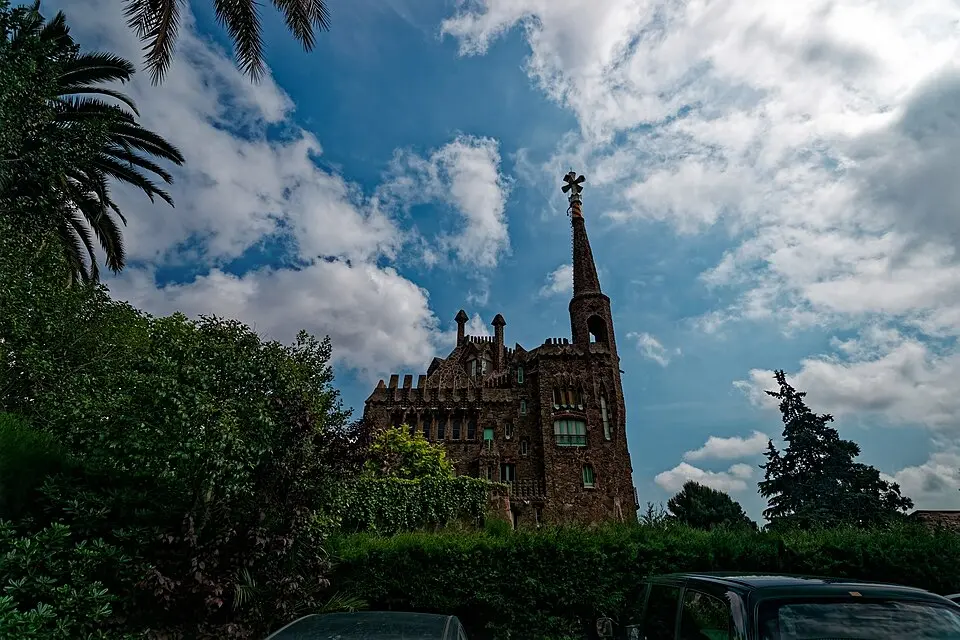
3. Bellesguard Tower: Gaudí’s lesser-known Gothic fortress
When we think of Antoni Gaudí’s legacy in Barcelona, the mind immediately travels to Casa Batlló, La Pedrera, or Park Güell. However, in the upper area of the city, at the foot of the mountain, hides one of his most personal, enigmatic, and least frequented works: the Bellesguard Tower, also formally known as Casa Figueres.
Built between 1900 and 1909, Gaudí projected this building on the historic remains of an old 15th-century medieval castle that had been the official residence of Martin I of Aragon (Martin the Humane), the last king of the House of Barcelona. With a deep respect for the history of the place, the modernist architect decided to discard his usual organic and colorful shapes to pay tribute to the estate’s medieval past. The result is a dazzling structure of straight lines that evokes a neo-Gothic fortress, clad in local slate stone in gray and green tones that allow the building to mimetice with the mountain landscape.
Despite its sober and defensive exterior appearance, the interior of the tower overflows with Gaudí’s technical genius, featuring Catalan vaulted ceilings, amazing natural lighting solutions, and symbolic details in every corner. The top of the tower is crowned by a four-armed cross covered in ceramics that shines under the Barcelona sun.
- Location: Carrer de Bellesguard, 20.
- Opening hours: Tuesday to Sunday, from 10:00 am to 3:00 pm.
- Admission: €12 (includes explanatory audio guide).
- Local tip: Go up without any rush to the roof terrace. In addition to contemplating up close the architect’s ingenuity for evacuating rainwater, you will enjoy an exceptional viewpoint over the entire plain of Barcelona. The views are just as clear as those from traditional viewpoints, but with the added advantage of absolute peace provided by the absence of crowds.
4. The Temple of Augustus: Roman columns guarded in a medieval courtyard
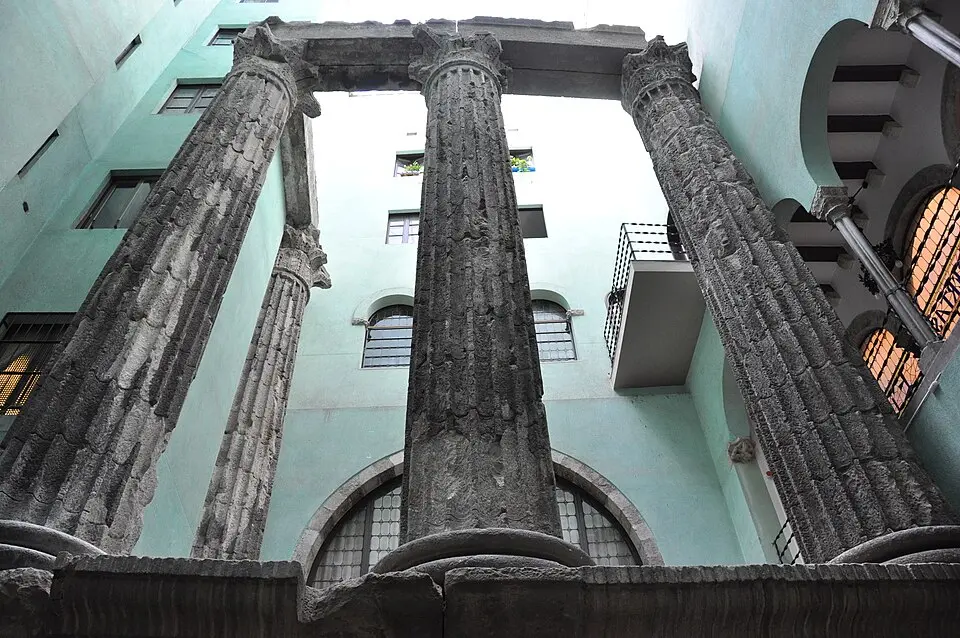
The Gothic Quarter is a labyrinth of stone surrounded by medieval facades, gargoyles, and charming squares. However, at the highest point of the ancient Roman colony of Barcino, the so-called Mons Taber, hides one of the most imposing and surprising archaeological remains of the city: the columns of the Temple of Augustus.
This 1st-century AD monument, dedicated to the imperial cult of Augustus Caesar, was lost for centuries, swallowed by the urban growth of medieval Barcelona, which used Roman structures as foundations or partition walls for new palaces. It was not until the end of the 19th century that, during the renovation works of the headquarters of the Center Excursionista de Catalunya, these monumental Corinthian columns, measuring more than nine meters in height, were rediscovered.
Today, to contemplate them, you must step into a small Gothic interior courtyard through a discreet entrance on Carrer del Paradís. The visual contrast is breathtaking: the four Roman columns with fluted shafts and finely carved capitals rise proudly toward the sky, confined within a Gothic architectural space that protects them from the inclement weather. It is one of the secret places in Barcelona that invites reflection on the successive layers of history that make up Barcelona’s subsoil.
- Location: Carrer del Paradís, 10 (A few meters from the back of the Cathedral).
- Opening hours: Monday from 10:00 am to 2:00 pm; Tuesday to Saturday from 10:00 am to 7:00 pm and Sundays from 10:00 am to 8:00 pm.
- Admission: Free.
- Local tip: The space has excellent information panels and benches to sit in silence. Take advantage of this corner to rest from the hustle and bustle of the city center and take a few minutes to observe the Corinthian capitals; the preservation of the details in the stone after two millennia is simply prodigious.
5. Historical Botanical Garden: The hidden Eden on Montjuïc mountain
Montjuïc is the mountain of museums, Olympic stadiums, and monumental fountains. It is an immense space where nature coexists with large infrastructures, but there is a corner that remains outside the itineraries of the vast majority of people: the Historical Botanical Garden. It should not be confused with the new Botanical Garden of Barcelona; this small Eden was founded in 1930 on the grounds of two old quarries exploited during the 1929 International Exposition.
The physiognomy of the terrain is the key to its mystery and its biological wealth. Being located at the bottom of two large stone hollows, the garden enjoys a unique microclimate in the city, with notably cooler temperatures and a constant level of humidity that shields it from the Mediterranean summer heat. This peculiarity has allowed the growth of unusual plant species in these latitudes, highlighting a collection of monumental trees including American redwoods, walnut trees of formidable proportions, and giant ferns that transport visitors to landscapes typical of subtropical or Atlantic zones.
The design of the garden invites you to take a leisurely stroll along shaded paths, small wooden walkways, and ponds where water flows continuously. It is an oasis of biodiversity where the silence is only broken by the sound of water and the rustle of foliage.
- Location: Av dels Muntanyans, s/n, Montjuïc (Behind the MNAC parking lot).
- Opening hours: November, December, and January from 10:00 am to 5:00 pm. February and March from 10:00 am to 6:00 pm. April, May, September, and October from 10:00 am to 7:00 pm. June, July, and August from 10:00 am to 8:00 pm.
- Admission: Free.
- Local tip: It is the perfect balm to recover energy after an intense day of cultural walking through the museums of Montjuïc. The garden houses the Catalan farmhouse that was built for the 1929 exhibition; its stone benches in the shade are the ideal place to read or simply enjoy the fresh air.
6. Air-raid shelters: Latent historical memory in the subsoil
Barcelona holds the sad honor of having been the first major city in the rear guard systematically and massively bombed by civil aviation on an unarmed population. This occurred during the Spanish Civil War, between 1936 and 1939. Faced with the lack of institutional defense, the city’s residents organized themselves as a community into the so-called “Passive Defense Boards” to dig with their own hands a network of more than 1,400 air-raid shelters in the city’s subsoil.
Today, some of these spaces have been recovered for collective memory and can be visited, especially highlighting Shelter 307 in the Poble-sec neighborhood and the Shelter of Plaça de la Revolució in Gràcia. Upon descending the steps that lead into the earth, the air becomes cool and the light dims, revealing narrow tunnels dug directly into the rock or reinforced with exposed brick arches.
Walking through these galleries allows you to understand the magnitude of neighborly solidarity at the time. The shelters had rooms for an infirmary, public restrooms, areas with wooden benches for children to rest, and a rudimentary but effective ventilation system. The pick marks on the dirt walls are a staggering testimony to the race-against-time effort made by thousands of people to save their lives.
- Location: Shelter 307 (Carrer Nou de la Rambla, 175); Shelter of Plaça de la Revolució (Gràcia).
- Opening hours: Arranged guided tours (usually on weekends through the Barcelona History Museum).
- Admission: Variable depending on the shelter’s management.
- Local tip: It is essential to book the guided tour in advance through MUHBA channels. The explanations of local guides add invaluable historical value, recounting the daily experiences of families who spent entire nights underground listening to the alarm sirens.
7. Cafè del Centre: A journey to the 19th century
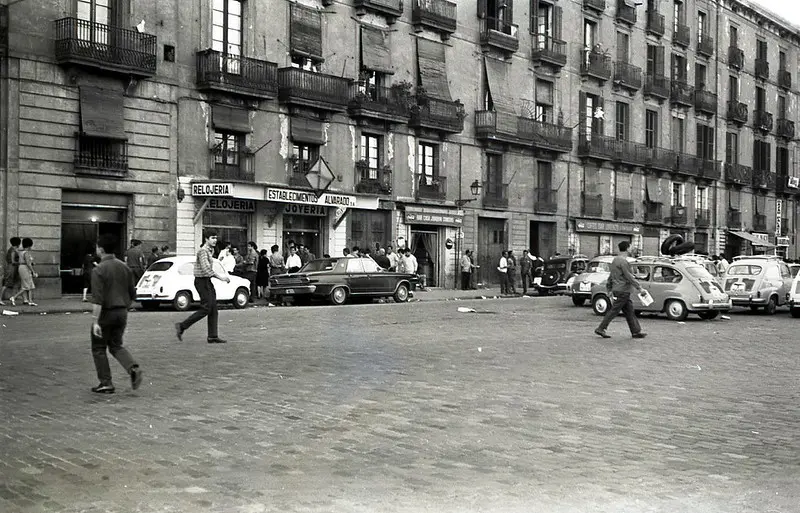
After hours of walking discovering secrets, any person visiting the city needs a culinary break, but in Barcelona it is possible to continue learning history and savoring local tradition at snack time or dinner. A perfect example of this is Cafè del Centre, one of the secret places in Barcelona that represents the living history of Eixample Dret. Originally opened in the distant year 1873, this establishment initially functioned as a neighborhood casino until, during Primo de Rivera’s dictatorship, gambling was banned by law. It was then that the space reinvented itself, first as a brewery and later as a bustling café that the owning family maintained with care until its transfer in 2021 to Grup Confiteria.
Officially classified as an emblematic establishment and a place of interest due to its incalculable heritage value, the premises underwent a deeply respectful renovation. Thanks to this, you can contemplate authentic modernist relics and, above all, the famous “pastera”: the mythical octagonal table in whose central slot the croupier kept the chips from clandestine baccarat games more than a century ago. The atmosphere preserves noble woods, aged mirrors, and a bohemian vibe that invites you to stop time.
Today, converted into a bar-restaurant, the space has the chef of the prestigious and neighboring establishment Betlem at the helm of the kitchen. The gastronomic proposal pays tribute to its playful past under the suggestive motto of “place your bets” (“hagan juego”), presenting an assortment of classic tapas reinterpreted with exquisite taste. You can delight in creations as original as Russian salad with tuna ventresca and piparra peppers served inside a croissant, cod “bomba” with chipotle romesco, or empanadas filled with black butifarra sausage and caramelized onion with sour cream. Not lagging behind are the mimosa eggs with diced red tuna or their essential dish: beef tartar with pickled mustard, culminating the experience with a surprising version of the classic whiskey cake. To round out the magic of the place, the service maintains the old-school essence thanks to the attention of professionals like Quim, a waiter with decades of experience in the missing and sorely missed Pitarra restaurant.
- Location: Carrer de Girona, 69.
- Opening hours: Monday to Friday, from 1:00 pm to 12:00 am. Saturdays and Sundays from 12:00 pm to 12:00 am.
- Admission: Free access (consumption according to menu).
- Local tip: Ask to be seated near the octagonal gaming table to observe the historic chip slot up close. It is the ideal place to enjoy a mid-morning vermouth or a late dinner with shared plates, letting yourself soak up the pulse of a space with more than 150 years of stories within its walls.
8. The Statue of Liberty on Passeig de Sant Joan: Arús’s New York replica
Passeig de Sant Joan has become in recent years one of Barcelona’s favorite boulevards thanks to its pedestrian design, terraces, and specialized bookstores. However, at number 26 of this avenue, behind the doors of a majestic 19th-century building, lies hidden one of the most unique and Masonic public libraries in Europe: the Arús Public Library. And inside, guarding the entrance staircase, stands a spectacular replica of the Statue of Liberty in New York.
Founded in 1895 thanks to the legacy of philanthropist, journalist, and prominent Mason Rossend Arús, the library was born with the firm purpose of enlightening the working classes of the time. Upon climbing the main marble staircase, you find yourself in front of a bronze statue about two meters high that faithfully reproduces the monument designed by Bartholdi in New York, holding a torch that illuminates the path of knowledge and a tablet that reads “Liberty of the soul”.
The library preserves its original 19th-century atmosphere intact, with noble wood bookshelves filled with old volumes, reading tables illuminated by vintage green lamps, and a collection unique in the world dedicated to Freemasonry, anarchism, and the labor movement in Catalonia. It is a quiet study corner that remains completely outside the traditional tourist circuit.
- Location: Passeig de Sant Joan, 26.
- Opening hours: Usually Monday to Friday, with morning or afternoon hours depending on the day (it is advised to check its official website). They also organize guided tours on weekends punctually.
- Admission: Free for reading room consultations; reduced rates for institutional guided tours.
- Local tip: Look closely at the Masonic symbols decorating the ceilings and woodwork of the main reading room. The library also houses a fascinating permanent collection on the character of Sherlock Holmes, being one of the most complete on the European continent.
9. Water Tower: The secret hidden inside the Eixample
Ildefons Cerdà’s urban design for the Eixample district in Barcelona contemplated large blocks of buildings with open interior courtyards that were intended to function as public gardens for neighborhood recreation. Although over the decades real estate speculation closed many of these spaces, in recent years the city council has recovered some of them, with the courtyard of the Water Tower standing out for its originality.
Built in 1870 to supply drinking water to the first homes in this new district, this imposing exposed brick tower presides over a landscaped interior courtyard accessed through a discreet passage between stately buildings on Carrer Roger de Llúria.
- Location: Carrer de Roger de Llúria, 56 (Access through the interior courtyard passage of the block).
- Opening hours: As a public park, open all year round from 10:00 am to 8:00 pm.
- Admission: Free.
- Local tip: If you visit the city during spring or autumn, this courtyard is one of the best places in the Eixample to enjoy the morning sun in absolute silence. Buy a coffee to go at one of the cafes in the area and enjoy the industrial architecture of the tower without urban interference.
10. Mercat dels Encants: The treasure of collecting under a mirrored canopy
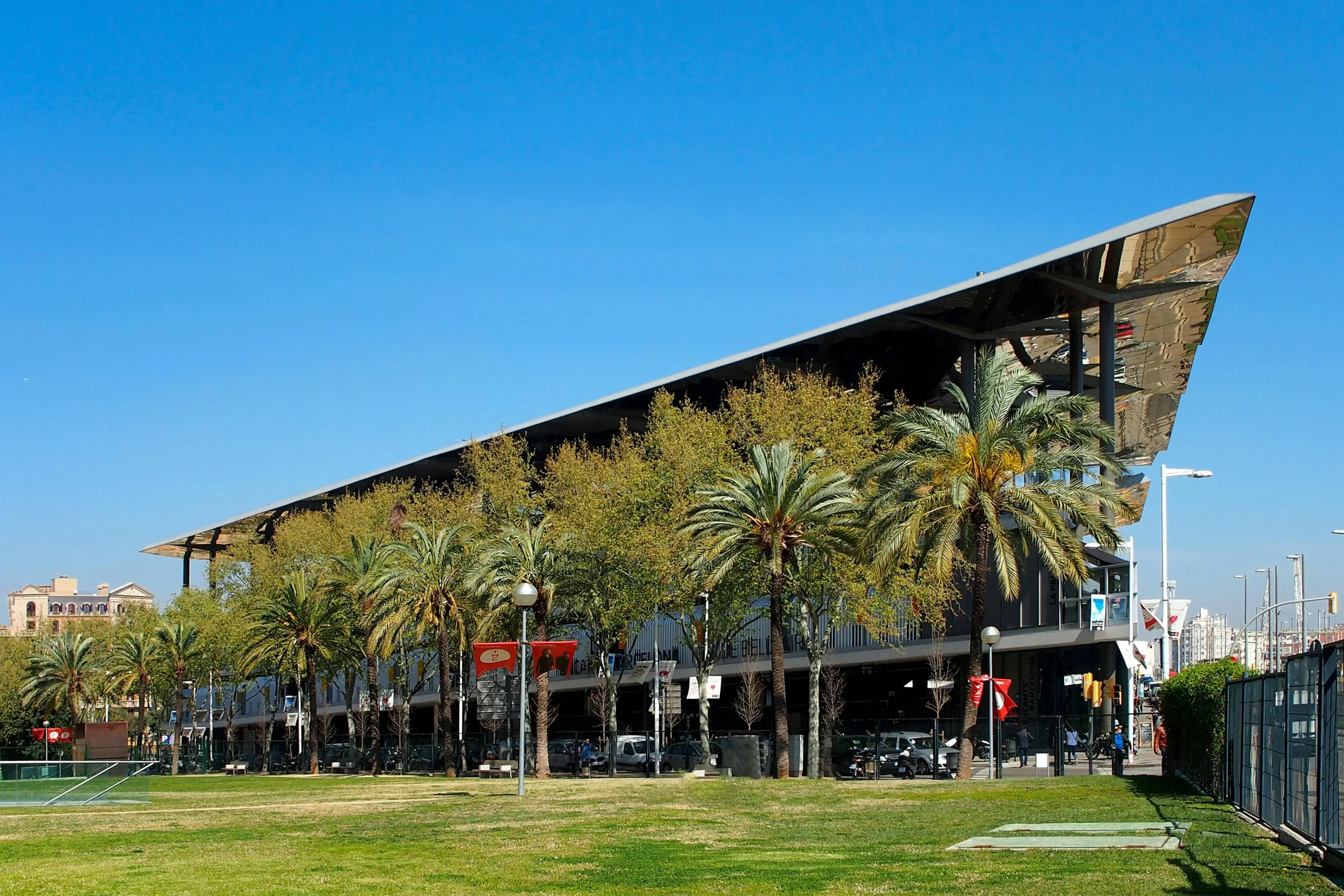
To finish this journey through the secrets of Barcelona, we move towards the remodeled Plaça de les Glòries, where the Mercat dels Encants stands (formally known as Fira de Bellcaire). With more than seven centuries of documented history, this flea market for antiques and second-hand items is one of the oldest in Europe that remains fully active.
Although its origin is medieval, in 2013 the market moved to a spectacular avant-garde architectural structure designed by Fermín Vázquez’s b720 studio. The most dazzling element of the venue is its immense canopy suspended twenty-five meters high, composed of polished stainless steel plates that function as a gigantic tilted mirror. As you walk along the market’s elevated corridors, look up and observe the distorted and colorful reflection of the frenetic activity taking place at ground level.
At Encants there are no conventional shops, but stalls where collectors and curious people can rummage through thousands of items: from restored vintage furniture, analog film cameras, and out-of-print vinyl records, to second-hand clothes, rare books, and curiosities from past eras. It is a living space where the art of bargaining remains part of the daily buying and selling ritual.
- Location: Carrer de los Castillejos, 158 (In front of the DHUB design museum).
- Opening hours: Monday, Wednesday, Friday, and Saturday, from 9:00 am to 8:00 pm.
- Admission: Free.
- Local tip: The true soul of the market is concentrated during the public auctions of antique lots, held early in the morning (from 7:45 am to 9:00 am) on Mondays, Wednesdays, and Fridays. It is the only market in Europe where this traditional form of live auction remains alive; arrive early to witness this traditional spectacle and capture the most authentic heartbeat of commercial Barcelona.
Summary table of the secret places in Barcelona
To facilitate tour planning for those who wish to discover these corners, below we present a summary table with the fundamental practical data for each location:
| Secret Place | Neighborhood / District | Main Attraction | Admission Type |
| Sant Pau del Camp | El Raval | 9th-century Romanesque monastery with a cloister of Caliphal influence | Paid, €6 |
| Horta Labyrinth | Horta-Guinardó | 18th-century historic garden with a cypress labyrinth | Paid (Free Wed and Sun) |
| Bellesguard Tower | Sarrià-Sant Gervasi | Gothic fortress and residential work by Antoni Gaudí | Paid, €12 |
| Temple of Augustus | Gothic Quarter | 1st-century AD Roman columns in a medieval courtyard | Free |
| Historical Botanical Garden | Montjuïc | Microclimate with redwoods and monumental trees in quarries | Free |
| Air-Raid Shelters | Poble-sec / Gràcia | Community tunnels excavated during the Civil War | Variable |
| Cafè del Centre | Eixample | Historic café open since 1873 | Consumption |
| Arús Library | Right Eixample | Statue of Liberty replica and Masonic documentary collection | Free (Reading room) |
| Torre de les Aigües | Right Eixample | Interior courtyard with industrial tower. | Free |
| Mercat dels Encants | Glòries / Poblenou | Antiques and public auction under a futuristic mirrored canopy | Free |
Tips for people traveling with a spirit of discovery
To make the experience of discovering this secret Barcelona as enriching and respectful as possible, we share some final recommendations for all travelers:
- Plan your trips on foot: Many of these secrets are hidden in interior passages or pedestrian streets with reduced speed. Walking through the city using the concept of “the last mile” allows people to notice details on facades, gargoyles, and historical inscriptions that remain invisible if you always travel underground or quickly.
- Respect the silence and privacy of the spaces: Spaces like the Arús Library, the Temple of Augustus, or the Monastery of Sant Pau del Camp are places of study, silence, or neighborly reflection. Maintaining a moderate tone of voice and keeping mobile phones on silent helps to preserve the peaceful atmosphere that makes these unique corners so special.
- Support local commerce: When you visit historic cafes like Cafè del Centre or look for bargains at the Mercat dels Encants, remember that you are contributing directly to the maintenance of the local economic fabric and the preservation of establishments that treasure an irreplaceable heritage value for the soul of Barcelona.
The city awaits you this 2026, ready to reveal the best secret places in Barcelona. You only need to change your pace, look up, and let yourself be guided by curiosity. Enjoy the adventure of discovery!